Tutoriales

Blog

Our digital marketing blog

How to optimize your website with Generative Engine Optimization in 5 steps

How to optimize your website with Generative Engine Optimization in 5 steps

Generative Engine Optimization has become one of the most relevant trends in the world of digital positioning. This evolution of traditional SEO redefines how artificial intelligence-based search engines—such as generative systems—select and cite information in their responses.

Below, we'll explain what Generative Engine Optimization is and how to apply it to your website through a practical, 5-step tutorial.

What is Generative Engine Optimization (GEO)?

The concept of Generative Engine Optimization refers to techniques aimed at improving a website's visibility within generative AI engines. Unlike traditional SEO, which works to achieve better rankings in search engines like Google, GEO seeks to influence the responses produced by artificial intelligence systems, ensuring that your website's content is cited as a reliable source.

Some key elements of this emerging discipline are:

  • AI-specific metadata that guides generative models in interpreting content.

  • The use of files like llms.txt, intended to indicate which parts of the site can be used by language models.

  • The clear, quotable structure of the content, designed to be integrated into narrative and conversational responses.

In this sense, Generative Engine Optimization is already an essential part of the strategy of any business that wants to gain visibility in the era of synthetic and conversational search.

Why choose Generative Engine Optimization?

  1. Visibility in AI responses
    Conversational engines prioritize clear and useful answers. Applying GEO increases your chances of appearing as a cited source.

  2. Adapting to new user habits
    More and more people are relying on generative search engines instead of traditional results. Being optimized for GEO means speaking the language of the present and the future.

  3. Differentiation and long-term results
    Implementing Generative Engine Optimization not only improves your ranking, it also gives you more control over how your brand is presented in generative environments.

How to optimize your website with Generative Engine Optimization in 5 steps

Step 1: Use AI-specific metadata and files

Create an llms.txt file, similar to the well-known robots.txt file, but geared toward generative models. In it, you can indicate which sections of your website can be analyzed and cited by artificial intelligence. Also add clear and consistent metadata.

Step 2: Structure your content to be citable

Divide your content into clear sections, use headings, lists, and concise sentences. Generative engines need to easily identify text fragments that can be integrated into a narrative response.

Step 3: Respond to the user's search intent

The content should directly answer users' questions. It's advisable to include FAQs, how-to guides, and simple explanations. Clarity and conciseness are key in Generative Engine Optimization.

Step 4: Integrate GEO with traditional SEO

Don't abandon the SEO techniques that already work: relevant keywords, technical optimization, quality backlinks, and useful content. GEO should work hand in hand with traditional SEO to ensure visibility in both traditional and generative search engines.

Step 5: Continuously monitor and adjust

Analyze how your presence in generative engines is evolving and adjust your strategy. Generative Engine Optimization is a constantly evolving field, so it's essential to adapt techniques quickly.

The value of Click Online 360 in your GEO strategy

At Click Online 360, we understand that SEO is undergoing a transformation. That's why we combine our expertise in web positioning with the most innovative trends, such as Generative Engine Optimization.

Thanks to our team, your business will be able to:

  • Identify real opportunities to appear in generative responses.

  • Create optimized and structured content to be cited by AI models.

  • Integrate GEO with robust and customized SEO strategies.

  • Maintain your brand's visibility in a digital environment that changes every day.

Trusting Click Online 360 means investing in cutting-edge SEO , capable of guaranteeing presence in both traditional search engines and generative engines.

Generative Engine Optimization is a necessary evolution of SEO. Implementing this strategy on your website through clear steps—metadata, structure, user intent, integration with traditional SEO, and monitoring—will allow you to gain visibility in generative AI engines.

At Click Online 360, we're ready to guide you through this transition and position your brand as a trusted source in the new era of digital search.


 

Go Online! Your Step-by-Step Guide to Creating a Successful eCommerce Site with PrestaShop

Go Online! Your Step-by-Step Guide to Creating a Successful eCommerce Site with PrestaShop

Have you always dreamed of having your own online store, but don't know where to start? You've come to the right place! In today's digital age, selling online is more accessible than ever. And if you're looking for a robust, flexible, and open-source solution for your eCommerce, PrestaShop is an option you should seriously consider.

In this guide, we'll walk you through the key steps for launching your online store, focusing on why PrestaShop is the ideal platform for your project and how to get the most out of it.

---

How to Start a Successful eCommerce Site with PrestaShop: A Step-by-Step Guide

Step 1: Define your Niche and Business Plan

Description: Before diving into the technical side, it's crucial to have a clear vision of what you want to sell and to whom. Research the market, identify your target audience, analyze your competition, and define your unique value proposition.

What you need to do:

  • Research profitable market niches.
  • Identify your ideal client (buyer persona).
  • Perform a SWOT analysis (Strengths, Weaknesses, Opportunities, Threats).
  • Create a basic business plan that includes your goals, marketing strategies, and financial projections.

Step 2: Choose your Store Name and Register your Domain

Description: Your store name is your online identity. It should be memorable, easy to remember, and relevant to your products. Once you have it, register it as your web domain.

What you need to do:

  • Brainstorm catchy and available names.
  • Check domain availability (look for a ".com," ".es," or an extension relevant to your business).
  • Register your domain through a trusted provider.

Step 3: Select your Hosting Provider

Description: Your online store needs a place to "live" on the internet. Choose a reliable hosting provider that offers good performance, security, and technical support.

What you need to do:

  • Compare different hosting providers (look for those optimized for PrestaShop).
  • Consider factors such as disk space, bandwidth, RAM, and SSL support.
  • Hire a hosting plan that suits your needs.

Step 4: Install PrestaShop on your Hosting

Description: This is where PrestaShop comes in! Most hosting providers offer one-click installation for PrestaShop, which makes this process much easier.

Why PrestaShop?

  • Free and Open Source: There are no initial licensing costs, making it ideal for startups.
  • Great Community: Access to forums, tutorials, and developers who can help you.
  • Powerful and Flexible: Capable of handling everything from small to large stores, with a vast amount of modules and themes.
  • SEO Friendly: Allows you to easily optimize your products and pages for search engines.
  • Multilingual and Multi-Currency: Ideal if you plan to expand internationally.
  • Complete Management: Total control over products, orders, customers, stock and marketing.

What you need to do:

  • Access your hosting control panel (cPanel, Plesk, etc.).
  • Look for the "Auto Installer" or "Applications" option and select PrestaShop.
  • Follow the steps to complete the installation.

Step 5: Configure your PrestaShop Store and Optimize Content

Description: Once you've installed PrestaShop, it's time to customize your store, upload your products, and ensure that both the design and content are optimized for your users and search engines.

What you need to do:

  • General Settings: Set your store's currency, primary language, contact information, time zone, and other basic settings that will govern overall operation.
  • Design and Theme: Choose a PrestaShop theme that not only reflects your brand's aesthetic, but is also responsive and offers a great user experience on any device. You can opt for free themes or invest in a premium theme with more features and support.
  • Design your Category Tree: Before uploading products, take the time to structure your categories in a logical and hierarchical way. An intuitive category tree will make it easier for your users to navigate and help search engines index your content correctly. Think about how a customer would search for your products.
  • Research and Apply Keywords: Conduct thorough keyword research related to your project and the products you offer. Use these keywords naturally in product titles, descriptions, categories, and blog content to improve your search engine visibility.
  • Upload Your Products: Add each product with **detailed and unique descriptions**, high-quality images (with descriptive alt text), prices, variants (sizes, colors, materials), attributes, and inventory control. The more valuable information, the better for both the user and SEO.
  • Configure Payment Methods: Integrate secure and popular payment gateways in your region, such as PayPal, Stripe, bank transfers, or cash on delivery. Offering a variety of options will increase your conversion rate.
  • Define Shipping Methods: Establish your shipping zones, integrate trusted carriers, and configure shipping costs. Be transparent about delivery times and rates to avoid customer surprises.
  • Create Essential Legal Pages: It's essential to have clear and accessible pages for "Legal Notice," "Privacy Policy," "Terms and Conditions of Purchase," and "Return Policy." This builds customer trust and complies with legal regulations.

Step 6: Basic SEO Optimization for PrestaShop

Description: To help your customers find you, you need to let Google and other search engines know you exist. PrestaShop makes SEO optimization easy.

What you need to do:

  • Friendly URLs: Enable rewritten URLs in PrestaShop to make them human-readable and contain keywords.
  • Meta Titles and Descriptions: Fill in these fields for each product and page, including relevant keywords.
  • Optimized Images: Use descriptive alt text for your images.
  • Quality Content: Write unique and detailed product descriptions. Consider creating a blog integrated with PrestaShop.
  • Install SEO Modules: PrestaShop has modules that can help you further improve your rankings.

Step 7: Perform Thorough Testing

Description: Before launching, it's crucial that you test every aspect of your store to ensure a flawless user experience.

What you need to do:

  • Make test purchases from start to finish.
  • Check all payment methods.
  • Check the customer registration and login process.
  • Make sure confirmation emails are sent correctly.
  • Test the store on different devices (mobile, tablet, desktop).

Step 8: Launch Your Store and Promote It!

Description: Once everything is perfect, it's time to open the doors of your online store to the world and start attracting customers.

What you need to do:

  • Disable maintenance mode in PrestaShop.
  • Promote your store on social media.
  • Consider online advertising campaigns (Google Ads, Facebook Ads).
  • Send newsletters to your subscriber list (if you already have one).
  • Keep optimizing your SEO and generating valuable content.
---

Your eCommerce Journey Starts Now!

Starting an eCommerce business can seem like a daunting task, but with a step-by-step approach and choosing a robust platform like PrestaShop , the path becomes much clearer. Remember that the key to online success lies in consistency, adaptability, and the ability to deliver an excellent customer experience.

Ready to take the plunge? PrestaShop is waiting for you with all the tools you need to build the online store of your dreams!

How to strategically plan Meta Ads campaigns based on your company's objectives

How to strategically plan Meta Ads campaigns based on your company's objectives

In the dynamic world of digital marketing, advertising platforms like Meta Ads (Facebook and Instagram) offer a range of opportunities for businesses of all sizes. However, the real challenge lies not only in launching campaigns, but in doing so with a clear strategy aligned with business objectives and supported by a professional and technical approach.

In this article, we share how to strategically plan your Meta Ads campaigns based on your business goals , the importance of diversifying, testing different ads, and how to leverage the platform's artificial intelligence—while keeping in mind that expert control remains key to success.

1. Everything starts with objectives: what does your company want to achieve?

Before opening Ads Manager and starting to set up campaigns, the first thing to do is be absolutely clear about what you're trying to achieve. Each campaign should directly address a business objective , and Meta understands this: that's why its platform offers different objective options that are generally grouped into three stages of the marketing funnel:

- Recognition : generate awareness, reach new audiences, and be remembered.
- Consideration : Attract traffic to your website, increase engagement, or get signups.
- Conversion : sales, leads, or specific actions on your site.

An effective strategy begins by aligning your business goals with the right advertising objectives within Meta Ads. For example, if you're launching a new brand, the focus should be on awareness and engagement campaigns. If you have an established e-commerce business, you probably want to maximize conversions.

📌 Pro tip: Never start with the ad; start with the strategy. Ask yourself: What is the real goal of this campaign? How will we measure success? What value will it bring to the company?

2. Diversify your Meta Ads campaigns

One of the most common (and risky) practices is concentrating your entire budget on a single campaign or ad set. This limits the algorithm's learning capacity and jeopardizes your results if something goes wrong.

Why diversify?

  • Different audiences react to different messages. What works for someone who already knows your brand isn't the same as what works for someone who's just discovering your brand.
  • Different formats, different opportunities. Carousels, reels, still images, short videos... Each format has its moment and its ideal audience.
  • Multivariate testing. By diversifying, you can compare what works and optimize based on real data, not assumptions.
  • A good practice is to design campaigns targeted at each stage of the funnel and assign a budget proportional to their impact and expected return. For example:
    • 20% for recognition
    • 30% for consideration
    • 50% on conversion

This mix can vary depending on the time of year, the state of your business, or your quarterly goals.

3. The value of testing: experiment, analyze, optimize

In Meta Ads, ads aren't "guessed," they're tested. One of the great advantages of digital advertising is the ability to conduct A/B testing and collect accurate data on the performance of each variable.

What should you test?

  • Different creatives (images, videos, colors, texts)
  • Messages and calls to action (CTAs)
  • Audience segmentations
  • Types of locations (feeds, stories, reels, etc.)

The key is not to assume you know what works. Let the public and the data speak for themselves. And remember: the best results come after many trials.

4. Take advantage of Meta's artificial intelligence, but don't trust it blindly

Meta Ads has evolved significantly in recent years. Today, its ad system uses machine learning and AI to automatically improve delivery, optimize budget, and suggest ad improvements.

How does AI help?

  • Adjust delivery in real time based on audience behavior.
  • Optimize campaigns to achieve the best cost per result.
  • Create automated ads with different combinations of text and images (dynamic creatives).
  • Identify patterns that humans would overlook.
  • However, while artificial intelligence can facilitate many technical aspects, it doesn't replace human strategy. AI doesn't understand your brand's context, it doesn't know when you're launching a new product, your values, or the tone of your communications. It also doesn't accurately interpret complex business objectives.
5. The irreplaceable role of marketing experts

Despite the power of automated tools, the sustainable success of Meta Ads campaigns depends onhaving expert digital marketing professionals who:

  • Understand the business model and its needs.
  • Design tailored strategies, not generic templates.
  • Correctly interpret data and key metrics.
  • Apply creative and technical criteria to create effective ads.
  • Know when to scale, when to pause, and when to pivot.
  • A poorly configured campaign can waste hundreds or thousands of euros in a short period of time. Therefore, experience and strategic analysis make the difference between a campaign that simply "wastes" and one that truly converts and generates profitability.

💡 Key quote: “AI is a great tool. But without good strategy and professional oversight, it's like having a Formula 1 car without a driver.”

Conclusion: strategy, diversification and professional control

Planning Meta Ads campaigns isn't simply about "posting ads." It's about creating a comprehensive strategy that aligns with your business goals, makes the most of the platform's tools (such as artificial intelligence), and, above all, is led by professionals who know how to interpret, adjust, and scale each action.

If you're investing in digital advertising, make sure you do so with vision, method, and the support of a team that understands both the business and the technology.

Do you want to take your campaigns to the next level? At Click Online 360, we're ready to help you design, execute, and optimize Meta Ads campaigns that truly make an impact.


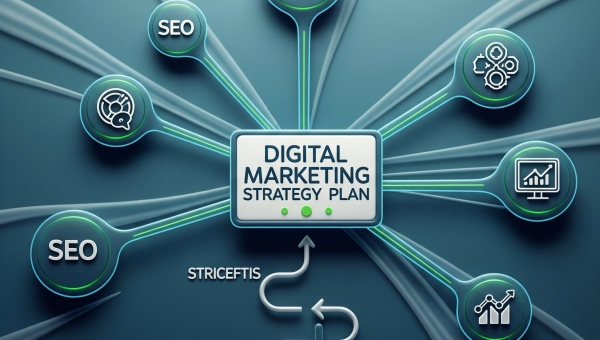
How to Plan a Digital Marketing Strategy Step by Step

How to Plan a Digital Marketing Strategy Step by Step

In today's dynamic digital world, having a well-defined digital marketing strategy isn't just an advantage—it's a necessity! If you want your business to grow, reach the right audience, and convert visitors into customers, you can't leave it to chance. But where do you start? Don't worry, we've created this step-by-step guide to help you plan an effective digital marketing strategy.

Step 1: Define your clear and measurable objectives

Before taking any action, you need to know what you want to achieve. Your goals should be SMART : Specific, Measurable, Attainable, Relevant, and Time-bound.

To do?

  • Ask yourself: Do you want to increase web traffic? Generate more leads? Improve online sales? Increase brand awareness?
  • Set clear metrics: For example, "increase organic traffic by 20% over the next 6 months" or "generate 50 qualified leads per month."

Define tus objetivos de marketing claros y medibles

Step 2: Research Your Target Audience

Knowing who you're talking to is essential. A successful digital marketing strategy is built on a deep understanding of your ideal customers.

To do?

  • Create buyer personas : Semi-fictional profiles of your ideal customers, including demographics, interests, pain points, challenges, and online behaviors.
  • Use analytics tools (Google Analytics, social media tools) to understand how your current audience interacts.

Investiga a tu Público Objetivo

Step 3: Analyze your Competition

Identifying your direct and indirect competitors will give you an idea of what's working in your industry and what opportunities you can take advantage of.

To do?

  • Investigate their content, social media, SEO, and paid advertising strategies.
  • Identify your strengths and weaknesses. What can you do better or differently?

Analiza tu competencia

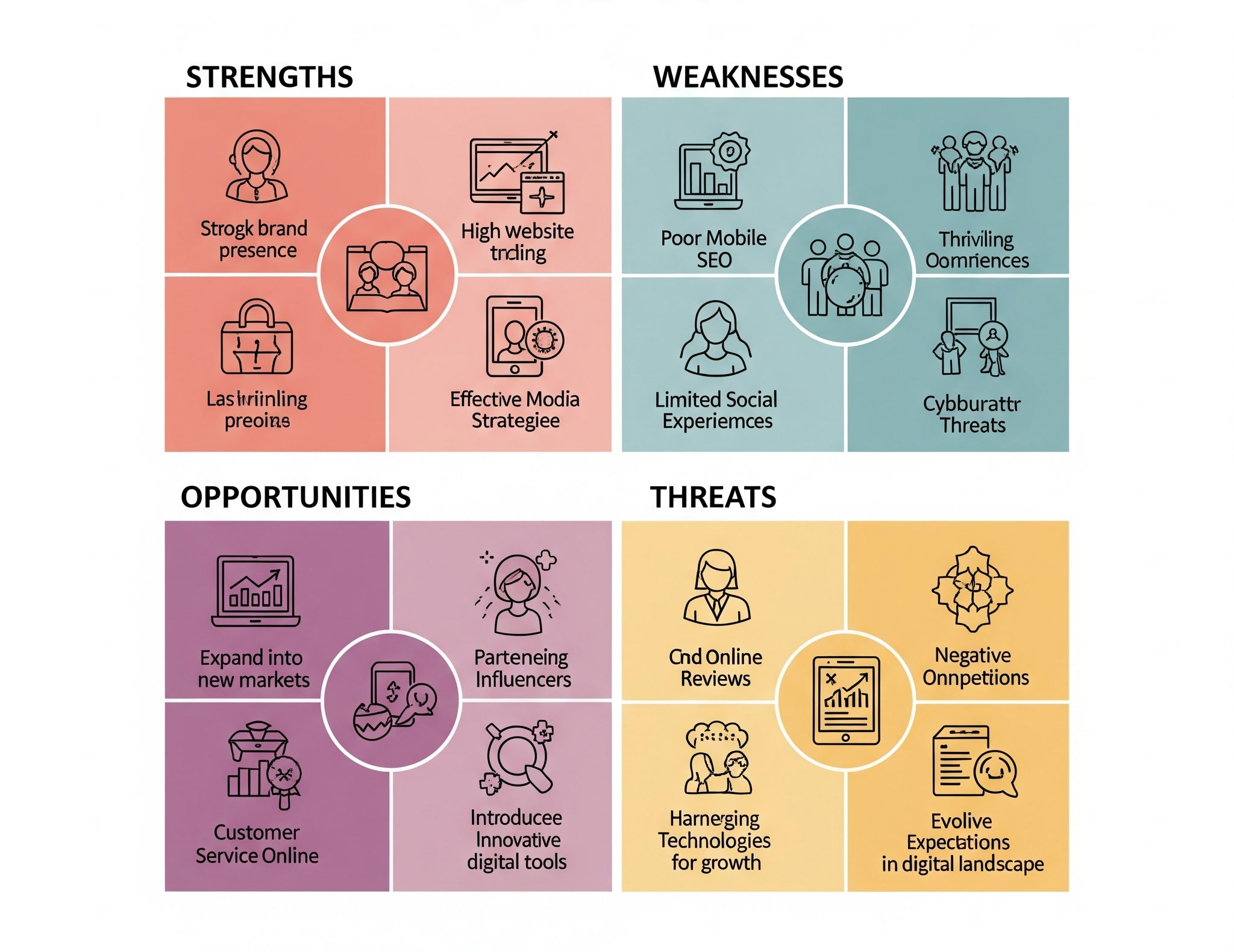
Step 4: Perform a Digital SWOT Analysis

Evaluate the strengths, weaknesses, opportunities, and threats of your own digital presence.

To do?

  • Strengths: What do you do well in the digital realm? (e.g., high-quality content, good ranking for certain keywords).
  • Weaknesses: Where do you need to improve? (e.g., poor social media presence, slow website).
  • Opportunities: What trends or niches could you explore? (e.g., new markets, emerging technologies)
  • Threats: What external factors could affect you? (e.g., changes to Google's algorithm, new competition).

Cuales son tus fortalezas y tus debilidades

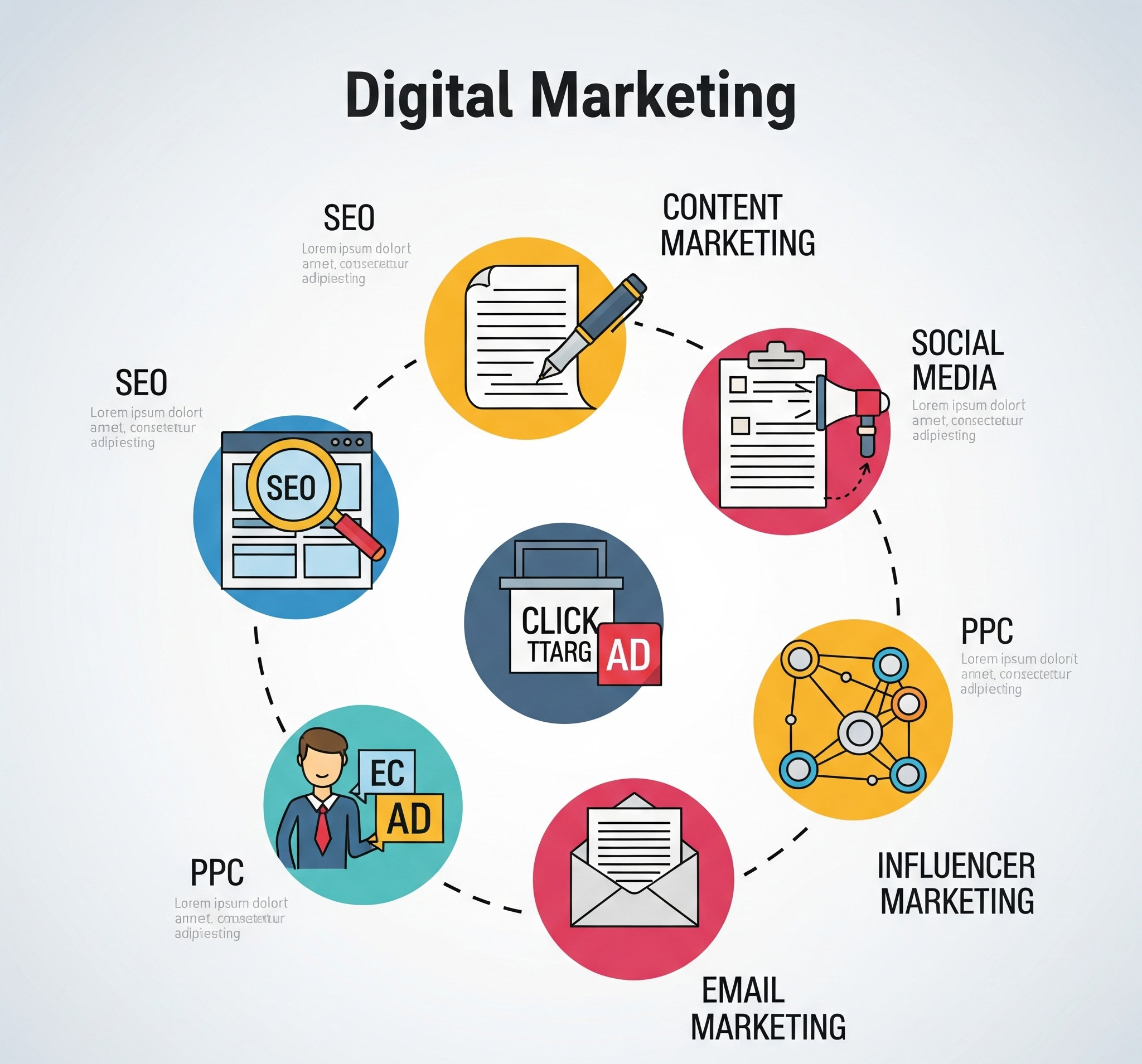
Step 5: Choose Your Digital Marketing Channels and Tactics

Based on your goals and prior analysis, select the channels and tactics that will allow you to reach your audience most effectively.

To do?

  • SEO (Search Engine Optimization): Improve your organic visibility.
  • Content Marketing: Create blogs, videos, and infographics that educate and entertain your audience.
  • Social Media: Choose the platforms where your audience spends the most time.
  • Paid Advertising (PPC): Google Ads, social media ads.
  • Email Marketing: Build relationships and foster loyalty.
  • Influencer Marketing: Collaborate with relevant figures in your niche.

Elige los canales que pueden funcionar en tu negocio

Step 6: Create Your Content and Editorial Calendar

Content is king. Plan what type of content you'll create, when you'll publish it, and on what channels.

To do?

  • Develop an editorial calendar that includes topics, formats, publication dates, and distribution channels.
  • Make sure your content is valuable, relevant, and SEO-optimized (keywords, structure).

Crea tu Contenido y Calendario Editorial

Step 7: Implement and Launch Your Strategy

Once you have everything planned, it's time to put it into action.

To do?

  • Set up your ad campaigns.
  • Publish your content according to the schedule.
  • Schedule your social media posts.
  • Make sure your website is optimized and working properly.

Implementa y Lanza tu Estrategia

Step 8: Measure, Analyze and Optimize

Digital marketing isn't static. It's a continuous process of testing, measuring, and adjusting.

To do?

  • Use analytics tools (Google Analytics, social media tools, etc.) to track the performance of your campaigns.
  • Analyze the data: Are you achieving your goals? Which tactics are working and which aren't?
  • Make constant adjustments and optimizations to improve your results.

Mide los resultados y rectifica si es necesario

Planning a digital marketing strategy is an exciting journey that, with these steps, will allow you to build a strong online presence and achieve your business goals. Get started today and take your brand to the next level!

Need help designing or implementing your digital marketing strategy? Contact us and let's talk about how we can boost your business!