
Blog
Our digital marketing blog
¡Domina el SEO y conquista Google!
En esta sección de nuestro blog, te sumergirás en el fascinante mundo del SEO (Search Engine Optimization). Aprenderás las estrategias, técnicas y secretos para optimizar tu sitio web y alcanzar las primeras posiciones en los resultados de búsqueda.
¿Estás listo para convertirte en un experto en SEO? ¡Sigue leyendo!
¿Qué es el SEO y por qué es tan importante?
El SEO es el conjunto de técnicas que se utilizan para mejorar la visibilidad de un sitio web en los motores de búsqueda como Google. Un buen posicionamiento en Google te permitirá:
- Aumentar el tráfico orgánico: Atrae visitantes a tu web de forma gratuita a través de las búsquedas.
- Generar más leads y ventas: Convierte a los visitantes en clientes potenciales y aumenta tus ingresos.
- Mejorar la visibilidad de tu marca: Posiciona tu marca como líder en tu sector.
- Aumentar el valor de tu sitio web: Un sitio web bien posicionado es un activo valioso para tu negocio.
¿Qué encontrarás en nuestra categoría SEO?
Encontrarás artículos sobre una amplia gama de temas relacionados con el SEO, incluyendo:
- SEO On-page: Optimización de contenido, etiquetas, estructura web, etc.
- SEO Off-page: Link building, redes sociales, menciones de marca, etc.
- SEO técnico: Velocidad de carga, seguridad web, indexación, etc.
- Análisis de palabras clave: Investigación de palabras clave, análisis de la competencia, etc.
- SEO local: Optimización para búsquedas locales.
- SEO para móviles: Adaptación de tu sitio web a dispositivos móviles.
- Últimas tendencias y actualizaciones de Google: Mantente al día de los cambios en el algoritmo de Google.
¿A quién va dirigido este contenido?
Este contenido es ideal para:
- Empresarios y emprendedores: Que quieran mejorar la visibilidad online de su negocio.
- Responsables de marketing: Que buscan estrategias para aumentar el tráfico y las conversiones.
- Profesionales del SEO: Que desean mantenerse actualizados sobre las últimas tendencias.
- Cualquier persona interesada en aprender sobre SEO: ¡No necesitas conocimientos previos!
¡No esperes más! Sumérgete en nuestros artículos y comienza a optimizar tu sitio web hoy mismo.

Duplicate or low-quality content can negatively impact any website's SEO ranking. Therefore, learning how to correct duplicate or low-quality content with AI has become a priority for businesses, copywriters, and digital marketers.
Below, ClickOnline360 explains step-by-step how to use artificial intelligence to identify and optimize content that isn't performing as it should.
The importance of correcting duplicate or low-quality content
Duplicate content—whether internal or external—can confuse search engines, dilute your website's authority, and cause a drop in rankings. Similarly, low-quality content (shallow, uninformative, or poorly structured) can reduce user retention and increase bounce rates.
The good news is that these problems can now be detected and corrected with the help of artificial intelligence tools. Below, we explain how to do this effectively.
Intelligent rewriting with AI
One of the most effective methods for addressing duplicate or low-quality content is rewriting the text using language models like ChatGPT. This tool allows you to maintain the original message of the content, while modifying its structure, style, and vocabulary to make it unique.
In addition to avoiding duplication, AI can help you enrich your content by providing added value, such as real-life examples, relevant statistics, or practical tips. It's also possible to generate synonyms, metaphors, or more creative rewordings that resonate better with the reader. Still, remember that this tool requires expert review to avoid any errors.
Improve SEO quality with the help of AI
Artificial intelligence can also help you improve your content from an SEO perspective, ensuring that it aligns with search intent and meets Google's quality standards.
Among the most useful tasks you can automate are:
-
Align the text with the user's search intent (whether informational, transactional, or navigational).
-
Add a clear hierarchy of H2 and H3 subheadings.
-
Suggest secondary keywords and long-tail variations.
-
Generate related frequently asked questions (FAQs) to enrich the semantics of the page.
Consolidate or eliminate pages with similar content
In some cases, the solution isn't rewriting, but consolidating. When a website has multiple URLs with similar content, cannibalization can occur—pages competing with each other for the same keyword.
With the help of AI, you can merge content into a single, more comprehensive, coherent, and higher-quality page. Once this is done, it's recommended to apply 301 redirects to older or lower-performing pages to preserve their SEO authority.
This strategy not only improves the user experience, but also simplifies the site architecture and improves search engine crawling.
Additional tips to avoid duplicate or low-quality content
-
Always prioritize search intent: Make sure your content clearly addresses what the user needs or expects to find.
-
Don't automate without supervision: AI is a powerful tool, but there should always be human review to ensure final quality.
-
Use Google Search Console to spot opportunities: Identify underperforming pages with low organic traffic as candidates for optimization.
Do you need professional help?
At ClickOnline360, we are experts in SEO positioning and always up to date with the latest innovations in artificial intelligence applied to digital marketing. We specialize in identifying opportunities, optimizing content, and implementing strategies that combine creativity, data analysis, and cutting-edge technology.
Knowing how to fix duplicate or low-quality content with AI is a key skill for improving your website's ranking, reducing technical SEO errors, and delivering a more valuable user experience.
At ClickOnline360, we help you implement intelligent solutions that combine the power of artificial intelligence with a tailored SEO strategy . If your site needs a thorough content overhaul, we're here to help.
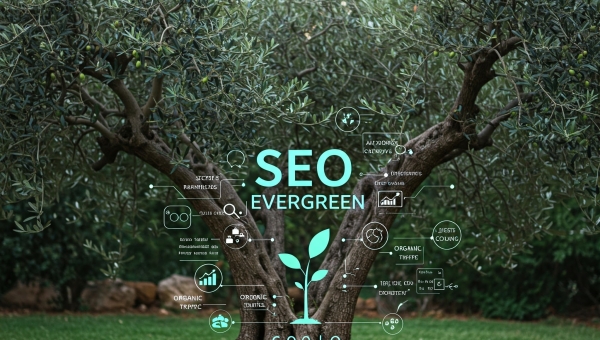
In the fast-paced world of digital marketing, where trends come and go at lightning speed, there is a beacon of stability: evergreen SEO. Unlike ephemeral tactics that bloom and wither with each algorithm update, evergreen SEO focuses on fundamental strategies that remain relevant and effective over time.
Imagine planting an oak tree instead of a seasonal flower. That's the essence of evergreen SEO: building a solid foundation that consistently attracts organic traffic, adapting to algorithmic changes, and maintaining its long-term value.
Why choose Evergreen SEO?
Investing in evergreen SEO is a smart move for several reasons:
- Long-term profitability : Once implemented, evergreen strategies continue to generate results without the need for constant re-optimization.
- Sustainable Growth : Build an online business that thrives over time, rather than relying on temporary traffic spikes.
- Brand Authority : Positions you as a trusted expert in your niche, making you the go-to source for your audience.
- Competitive advantage : Allows you to outperform competitors who focus solely on short-term trends.
- Scalability : Your SEO strategy can grow without you having to constantly reinvent the wheel.
Pillars of Evergreen SEO: Strategies That Last
Evergreen SEO relies on a number of key components that ensure its longevity and effectiveness:
Creating Timeless Content: The Foundation of a Lasting Resource Center
The heart of evergreen SEO lies in creating content that addresses your audience's fundamental needs and questions—content that will be valuable today, tomorrow, and years from now.
Industry Core Topics: Focus on detailed guides, tutorials, and resource pages on key topics in your industry.
Regular updates: Evergreen doesn't mean "set it and forget it." Keep your content fresh by updating it periodically with new information, insights, and examples.
Content Types: Prioritize how-to guides, step-by-step tutorials, and resource pages. These formats attract consistent traffic because they solve ongoing problems.
Evergreen Keyword Research: Targeting Long-Term Search Intent
Evergreen SEO is all about finding and targeting keywords that have staying power.
Long-tail keywords: These are your best allies. Not only do they match specific user intent, but they also have a consistent search volume over time.
User intent: Focus on what your audience is actually searching for, not just what's trending. Tools like Semrush, Ahrefs, and Google Keyword Planner are essential for uncovering these gems.
Consistency: Look for keywords that have shown consistent search volume over time. These are indicators of long-term relevance.
On-Page Optimization: Creating Content That Stands the Test of Time
On-page optimization is where you fine-tune your content to ensure it remains relevant and easily discoverable.
Title tags and meta descriptions: Create these elements with longevity in mind. Use clear, descriptive language that won't become outdated.
Schema markup: Implement schema markup to give search engines a better understanding of your content. This improves visibility and click-through rates.
Alt Text and File Names: Optimize your images with alt text and descriptive file names. This not only improves accessibility but also keeps your content relevant in image search results.
Technical SEO: Keeping Your Site in Top Condition
Technical SEO is about making sure your website is fast, secure, and accessible, today and tomorrow.
Site Speed and Core Web Vitals: Prioritize speed. Google loves fast sites, and so do your visitors. Pay close attention to Core Web Vitals metrics like loading speed, interactivity, and visual stability.
Responsive design: Make sure your site is mobile-friendly. This isn't just a trend; it's a necessity as mobile search continues to grow.
Link Building: The Evergreen Approach to Earning Links
Building content that demonstrates your expertise and authority can enhance your evergreen strategy.
Credible Sources: Link to credible and authoritative sources within your content.
Showcase your expertise: Highlight your credentials and experience within your content to establish trust.
Adapting to the Future of SEO
While the fundamental strategies of evergreen SEO remain, it's crucial to stay on top of emerging trends to ensure their continued effectiveness. Artificial intelligence (AI) and machine learning are transforming SEO, enabling smarter and more personalized optimizations. Optimizing for voice search is becoming increasingly important as virtual assistants gain popularity. Video content remains a dominant force, and optimizing your videos for SEO is essential. Finally, building content that demonstrates Expertise, Authority, and Trustworthiness (EAT) remains vital to earning Google's trust.
Conclusion: Invest in the Present for a Solid Future
Evergreen SEO isn't a quick fix, but rather a long-term strategic investment. By focusing on creating timeless content, evergreen keyword research, sustainable on-page optimization, and robust technical SEO, you'll build an online presence that will withstand fads and continue to drive valuable traffic to your website for years to come. Remember, the oak will always outperform the bloom.
_thumbnail.png)
In the world of e-commerce, every second counts. Online store ranking increasingly depends on offering a fast, stable, and intuitive experience. This is where Core Web Vitals come into play, a set of key metrics that Google uses as a ranking factor and that directly influence the visibility of your e-commerce site.
Below, from Click Online 360, an SEO agency with extensive experience in eCommerce projects, we explain why these metrics can make the difference between an online store that sells... and one that doesn't take off.
What are Core Web Vitals and why do they matter for SEO?
Core Web Vitals are three metrics that measure a website's performance in key aspects of user experience:
-
LCP (Largest Contentful Paint) : Measures how long it takes for the largest visible content (such as a main image or banner) to load. An optimal value is less than 2.5 seconds.
-
INP (Interaction to Next Paint) : This replaces the FID metric since March 2024. It evaluates the responsiveness of the entire session, not just the first click. It must be under 200 milliseconds.
-
CLS (Cumulative Layout Shift) : Measures unexpected changes in the layout while the page loads. A good value is less than 0.1.
For any online store, these metrics are crucial. A poor score can lead to user frustration, abandoned shopping carts, and lost sales. It also negatively impacts your online store's ranking in Google search results.
How to measure your online store's Core Web Vitals
There are tools to understand the status of your website, which allow you to analyze your URL and view both laboratory and real-world metrics using data from Chrome users.
Additionally, web audits show you detailed LCP, INP, and CLS values and offer personalized technical recommendations.
At Click Online 360, we use various tools to accurately analyze each eCommerce store and prioritize the actions that truly improve performance and conversion.
Steps to improve Core Web Vitals and boost your online store
1. Audit your site
A technical website audit will allow you to get a clear breakdown of critical points, without the need for advanced development knowledge. This will allow you to make data-driven decisions.
2. Optimize heavy images and resources (improve LCP)
Most loading times come from poorly optimized images. Use formats like WebP, enable lazy loading, and compress your files. If you work with WooCommerce or Shopify, there are plugins that automate this process.
3. Reduce main thread blocking (improves INP)
Minimize unnecessary JavaScript scripts, load files asynchronously, and prioritize essential resources. Lower latency translates into a better user experience... and improved online store rankings.
4. Avoid unexpected movements (CLS improvement)
The trick is to reserve the space that elements like images, sliders, or ads will take up. Use fixed values in your CSS and you'll prevent the design from "jumping" while loading.
5. Activate caching and use a CDN
Especially if you have customers in different locations, a CDN reduces load times worldwide. Additionally, browser caching speeds up the experience for returning users.
Click Online 360: Technical SEO experts for online stores
At Click Online 360, we specialize in improving online store rankings from a technical, strategic, and data-driven perspective. Our approach combines SEO auditing, Core Web Vitals analysis, performance improvement, and continuous optimization to achieve what every online store desires: more traffic, more conversions, and more sales.
We work with e-commerce businesses of all sizes, adapting strategies to the real needs of each digital business.
Speed, stability and experience = better positioning
Core Web Vitals are much more than numbers: they reflect how a user experiences your online store. Improving them means offering a smooth, reliable, and fast shopping experience, which not only improves conversions but also improves your online store's search engine ranking.
Remember: every millisecond counts. And in eCommerce, the difference between success and abandonment is often decided by the first click.
_thumbnail.png)
Google updates are one of the most decisive factors for web positioning. If you've noticed a drop in traffic to your site in recent weeks, you've likely been affected by the latest algorithm update.
Below, we explain how to identify the impact, what you can do to adapt, and how Click Online 360 , an SEO agency with extensive experience in the sector, can help you recover and emerge stronger.
What are Google updates?
Google constantly makes improvements to its algorithm to provide more relevant and useful results to users. Some updates are minor, but others, known as Core Updates , can completely change the way websites are evaluated. These updates affect factors such as content quality, user experience, and domain authority.
Signs that your website has been affected by an update
- Sudden drop in organic traffic.
- Lower visibility in main keyword rankings.
- Decrease in the number of leads or conversions.
- Changes in user behavior on your site (more bounce, less time spent).
If you notice any of these symptoms, your site likely needs an audit to identify which areas are no longer compliant with Google's new requirements.
How to recover after an update: the essential checklist
1. Evaluate the quality of the content
One of the main goals of Google updates is to reward original, useful, and relevant content.
- Originality and value : Avoid duplication. Each piece of content should precisely address a specific search intent.
- Depth and relevance : Don't write just to rank, but to address real questions. Comprehensive content always has an advantage.
- Constant updating : Keep your texts up-to-date. An outdated article loses authority.
2. Strengthens the user experience (UX)
Google prioritizes sites that offer comfortable and pleasant navigation.
- Responsive design : Your website should look perfect on all devices.
- Loading Speed : Optimize images, scripts, and hosting so your site loads in less than 3 seconds.
- Intuitive navigation : Clear menus, well-structured links, and logical visual hierarchy.
3. Improve the technical aspects of SEO
The technical part remains essential after each Google update .
- Clean URLs : That explain the content without strange characters.
- Well-implemented tags : Correctly use H1, H2, meta descriptions and ALT tags in images.
- Sitemap and robots.txt : Make sure bots can crawl and index your site without hindrance.
4. Prioritize EEAT (Experience, Expertise, Authority and Trust)
Starting in 2023, Google will place more emphasis on EEAT, rewarding sites with credibility.
- Clear authorship : Indicate who signs the content and why they are an expert on the subject.
- Reliable sources : Provides data backed by recognized entities.
- Reviews and Testimonials : Showcase real customer reviews to reinforce your authority.
5. Monitor and analyze performance
You can't improve what you don't measure.
- Google Search Console : Identify indexing errors, traffic drops, and new opportunities.
- Google Analytics : Study user behavior and adjust your strategy.
- SEO Audits : Conduct periodic reviews with experts to detect weaknesses and correct them.
6. Follow Google's official guidelines
- Avoid bad practices : No keyword stuffing, cloaking, or purchased links.
- Focus on the user : Content should be designed to address real needs, not to manipulate rankings.
- Always stay informed : Follow official and specialized sources such as the Search Central blog or the Google Updates channel.
Why trust Click Online 360 for your SEO recovery?
At Click Online 360, we've been helping companies achieve stable and lasting rankings for years, even after the most demanding Google updates . Our team of SEO experts conducts comprehensive audits, redesigns strategies, and supports you step by step to help your website rise again in the rankings.
We believe in sustainable SEO, based on data, strategy, and experience. And above all, we believe that every project is unique and deserves a customized solution.
Google updates can cause uncertainty, but they're also an opportunity to improve. If you've noticed a drop in your metrics, don't panic. Review your site, adjust your content, improve the user experience, and seek the support of an experienced SEO agency like Click Online 360. Only then will you be able to recover and regain your strong positioning.
_thumbnail.png)
Identifying an SEO penalty on a website is crucial to maintaining visibility and search engine rankings. Detecting any problems early can prevent significant traffic loss and potential penalties that could impact a company's digital reputation.
What is an SEO penalty?
An SEO penalty is the action Google or other search engines take when they detect that a website has violated their quality guidelines. These penalties can be manual, when a Google employee reviews and penalizes the site, or algorithmic, when the algorithm automatically detects irregular practices.
Main current failures that can lead to penalties
1. Duplicate Content
Duplicate content is one of the most common errors that can lead to SEO penalties. Google prioritizes original and valuable content, so copying text from other pages or repeating internal content can negatively impact rankings.
To solve this problem, as an SEO agency , at Click Online 360 we conduct content audits and use tools to ensure that the content is unique.
2. Excessive Use of Keywords (Keyword Stuffing)
Artificially including the keyword too many times in the content can be interpreted as manipulative.
To achieve this, our department considers keyword density between 1% and 2%, ensuring that the writing is natural and provides value to the user.
3. Low Quality Links
Inbound links from untrustworthy or spam sites can negatively affect a website's authority.
One of the tasks Click Online 360 performs with its clients is disavowing toxic links, so that they don't affect the page's web positioning.
4. Hidden Content
Including hidden text or links with the intent to manipulate rankings may lead to a manual penalty.
It's important to review the source code and ensure that all content visible to search engines is also visible to users.
5. Slow Loading Time
Websites with long loading times may be penalized, as they negatively impact the user experience.
At Click Online 360, we employ various techniques to improve website loading, such as image optimization, lazy loading, and improving server speed.
Tips to avoid penalties in the future
- Create original and valuable content for users.
- Maintain a well-organized internal link structure.
- Conduct regular SEO audits to identify potential issues.
- Avoid any Black Hat SEO practices.
- Update old content to keep it relevant.
Why choose Click Online 360 as your SEO agency?
At Click Online 360, we are committed to boosting your business's success through cutting-edge SEO strategies . We have a team of expert professionals who have taken small and large businesses to the top of search results. We increase your visibility, boost your growth, and boost your company's profitability.
Identifying an SEO penalty on a website is essential for protecting your website's online ranking and reputation. By understanding the main errors that can lead to penalties and implementing effective solutions, you can recover lost traffic and strengthen your digital presence. With an SEO strategy based on best practices, you can avoid future penalties and maintain sustained growth.

In today's fiercely competitive digital world, standing out from the crowd is crucial. And this is where organic SEO comes in—your best ally for achieving sustainable and consistent online success.
Think of your website as a seed. If you plant it in fertile soil and nurture it with dedication (SEO), it will grow strong and healthy, bearing fruit in the long run. Shortcuts (like buying traffic) may seem tempting, but they're like artificial fertilizers: they produce quick, but short-lived, and often harmful results.
Why is organic SEO so important?
Visibility : Good SEO positions you at the top of search results, increasing the visibility of your website.
Qualified traffic : Attract users who are truly interested in what you offer.
Credibility : Appearing at the top of Google generates trust and authority.
Profitability : Unlike paid advertising, organic SEO offers long-term results at no direct cost.
Better user experience : An SEO-optimized website is easier to navigate and offers a better user experience.
![Organic SEO is the key to online success!]() How to build a solid organic SEO strategy?
How to build a solid organic SEO strategy?
 How to build a solid organic SEO strategy?
Keyword Research : Identify the keywords your target audience uses to search for information related to your website.
On-page Optimization : Optimize your website content (titles, descriptions, images) using relevant keywords.
Link building : Get quality links from other websites relevant to yours.
Quality content : Create original, useful, and relevant content that meets your audience's needs.
Technical SEO : Make sure your website is optimized for search engines (loading speed, structure, etc.).
Analysis and tracking : Monitor the performance of your SEO strategy and make adjustments to continuously improve.
Remember, organic SEO is a marathon, not a sprint. It takes time, effort, and patience, but the results are worth it.
Ready to reap the benefits of organic SEO? Contact us today and we'll help you grow a strong and sustainable online presence!