Blog
Our digital marketing blog
¡Domina el SEO y conquista Google!
En esta sección de nuestro blog, te sumergirás en el fascinante mundo del SEO (Search Engine Optimization). Aprenderás las estrategias, técnicas y secretos para optimizar tu sitio web y alcanzar las primeras posiciones en los resultados de búsqueda.
¿Estás listo para convertirte en un experto en SEO? ¡Sigue leyendo!
¿Qué es el SEO y por qué es tan importante?
El SEO es el conjunto de técnicas que se utilizan para mejorar la visibilidad de un sitio web en los motores de búsqueda como Google. Un buen posicionamiento en Google te permitirá:
- Aumentar el tráfico orgánico: Atrae visitantes a tu web de forma gratuita a través de las búsquedas.
- Generar más leads y ventas: Convierte a los visitantes en clientes potenciales y aumenta tus ingresos.
- Mejorar la visibilidad de tu marca: Posiciona tu marca como líder en tu sector.
- Aumentar el valor de tu sitio web: Un sitio web bien posicionado es un activo valioso para tu negocio.
¿Qué encontrarás en nuestra categoría SEO?
Encontrarás artículos sobre una amplia gama de temas relacionados con el SEO, incluyendo:
- SEO On-page: Optimización de contenido, etiquetas, estructura web, etc.
- SEO Off-page: Link building, redes sociales, menciones de marca, etc.
- SEO técnico: Velocidad de carga, seguridad web, indexación, etc.
- Análisis de palabras clave: Investigación de palabras clave, análisis de la competencia, etc.
- SEO local: Optimización para búsquedas locales.
- SEO para móviles: Adaptación de tu sitio web a dispositivos móviles.
- Últimas tendencias y actualizaciones de Google: Mantente al día de los cambios en el algoritmo de Google.
¿A quién va dirigido este contenido?
Este contenido es ideal para:
- Empresarios y emprendedores: Que quieran mejorar la visibilidad online de su negocio.
- Responsables de marketing: Que buscan estrategias para aumentar el tráfico y las conversiones.
- Profesionales del SEO: Que desean mantenerse actualizados sobre las últimas tendencias.
- Cualquier persona interesada en aprender sobre SEO: ¡No necesitas conocimientos previos!
¡No esperes más! Sumérgete en nuestros artículos y comienza a optimizar tu sitio web hoy mismo.

In 2025, AI will continue to be a key factor in SEO. Google is already using AI to improve its search algorithms, and this is expected to continue in the future. This means that websites that are optimized for AI will have a competitive advantage.
How to optimize your website for AI?
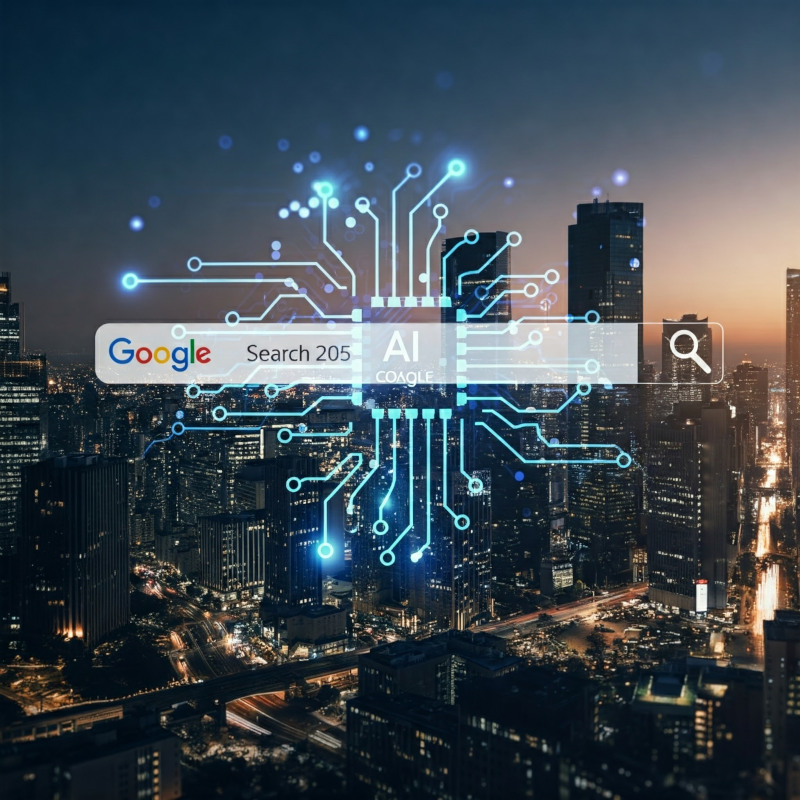 There are several things you can do to optimize your website for AI. Some of the most important ones are:
- Create high-quality content. High-quality content is more likely to be ranked by search algorithms. Make sure your content is relevant, useful, and easy to read.
- Use relevant keywords. Keywords are the words that users use to search for information online. Make sure your website uses keywords that are relevant to your business.
- Build high-quality links. High-quality links are links from other websites that point to your website. These links help search engines determine the authority of your website.
- Optimize your website for speed. Websites that load quickly are more likely to be ranked by search engines. Make sure your website loads in less than 3 seconds.
- Using AI to create content. AI can be used to create high-quality content. This can be a great way to save time and money.
How will AI affect SEO in 2025?
AI is expected to have a significant impact on SEO by 2025. Some of the changes expected include:
Improvements in semantic search . Semantic search is a technology that allows search engines to understand the meaning of search queries. This means that websites that use relevant keywords and high-quality content will have a competitive advantage.
Personalization of search results . AI can be used to personalize search results for each user. This means that users will see results that are most relevant to them.
Increasing importance of visual content . Visual content, such as images and videos, is becoming increasingly important in SEO. AI can be used to analyze visual content and determine its relevance to search queries.
Conclusion
AI is an ever-evolving technology. As AI continues to develop, it is important for websites to stay up to date with the latest trends. By optimizing your website for AI, you can improve your search engine rankings and drive more traffic to your website.
If you want to see more on this topic we recommend, "Google. [Google]. (2024, December 1). Building the Future: Sundar Pichai on AI, Regulation and What's Next for Google [Video]. YouTube." watch video

When it comes to ranking a page in the top results on Google, avoiding SEO penalties is just as important as optimizing your content. Web content penalties can seriously impact your visibility, reducing traffic and damaging your online reputation.
Below, Click Online 360 analyzes the 5 most common web content penalties and how to avoid them to maintain a healthy and effective SEO strategy.
Duplicate content: the invisible enemy
Duplicate content remains one of the main causes of web content penalties. Google penalizes pages that publish text copied from other sources or even repeat blocks of text within the same site. This directly affects ranking, as the search engine doesn't know which page to prioritize.
How to avoid it:
- Use tools like Copyscape or Siteliner to detect duplicates.
- Create unique and original content, offering added value to your customers and readers.
- Implement canonical tags if you need to publish similar content on multiple URLs.
Web oversizing: more is not always better
Loading your website with unnecessary pages, irrelevant posts, or duplicate categories can cause you to lose authority. This problem, known as "thin content," provides no value to the user and is one of the most common penalties.
How can you avoid it?
- Regularly review your website content and remove useless pages.
- Create relevant content focused on answering your audience's search queries.
- Unify similar posts or pages into a single, well-optimized one.
Buying backlinks on the fly: dangerous and detectable
Buying backlinks in bulk is a practice penalized by Google. Although quality external links are essential for improving SEO, a sudden and artificial increase can cause your website to be detected as suspicious.
We recommend…
- Build backlinks organically through collaborations and quality content.
- Diversify your link sources.
- Avoid platforms that sell bulk link packages.
Error messages from the web: poor user experience
Errors like 404s (page not found) or broken redirects not only affect the user experience but also hurt your SEO. Google considers these issues indicative of a neglected website.
How to avoid it:
- Use tools like Google Search Console to monitor errors.
- Set up 301 redirects for deleted or moved pages.
- Conduct regular audits to detect broken internal links.
Slow page speed: the big SEO drag
Loading speed is a key factor for ranking. A slow page not only affects the user experience but can also lead to an increase in bounce rates, something Google penalizes.
We recommend…
- Optimize images and use formats like WebP.
- Enable file compression using Gzip.
- Use a reliable hosting service and a CDN (Content Delivery Network).
Avoiding these five most common web content penalties is essential to keeping your site visible and competitive in search engines. From duplicate content to loading speed, every detail counts in an effective SEO strategy. Remember, the main goal is to offer relevant content and an exceptional user experience.
Boost your SEO strategy with Click Online 360
At ClickOnline360, we are experts in preventing and resolving penalties that affect your website's performance. We analyze every detail to ensure your site meets Google standards and improves its ranking.
We specialize in creating customized SEO strategies that increase your organic traffic and maximize your brand visibility. If your website has been affected by errors such as low-quality backlinks, technical issues, or thin content, don't worry: we're here to help. Our methodology combines advanced audits, unique content creation, and cutting-edge optimization techniques.
Take your website to the next level. Contact us today and transform your online presence!

In the world of SEO, we are always looking for clues about how Google’s algorithm works . We want to know what factors influence a website’s ranking so we can optimize our content and reach the top of search results.
A few months ago, in May, a massive leak of Google Search API documents shook the SEO community. This leak, which was made public thanks to an anonymous tipster, revealed fascinating details about how Google processes information and decides which pages to display in its results.
What is the most important thing about this leak?
 Google does use domain authority:
 Google does use domain authority:
One of the bombshells of the Google leak was the confirmation that Google does indeed use domain authority as a ranking factor. Although the company has always publicly denied this, the leaked documents revealed the existence of an internal metric that assesses the "strength" of a domain.
This means that when deciding which pages to display in search results, Google takes into account the reputation and credibility of the website they belong to.
How does Google calculate domain authority?
Although the documents do not reveal the exact formula, it is known that Google considers factors such as:
Domain age: Older domains typically have more authority.
The link profile: The quantity and quality of links pointing to a domain are crucial.
Content quality: A website with relevant, original and high-quality content will have more authority.
Social media presence: Activity and popularity on social media can also have an influence.
Penalty history: If a website has been penalized by Google in the past, its authority will be affected.
In short, domain authority is an important factor for SEO. If you want your website to rank well on Google, you need to work on building a strong and trustworthy online brand.
How can you improve your domain authority?
- Create high-quality content that is relevant to your target audience.
- Get links from relevant and authoritative websites.
- Promote your website on social media and other platforms.
- Make sure your website is secure and mobile-optimized.
- Avoid any practice that could be considered spam by Google.
By following these recommendations, you can increase your domain authority and improve your positioning on Google.
Clicks and user behavior matter:
Google has always maintained an ambiguous stance on the influence of clicks and dwell time on website positioning. While they claim that they are not direct ranking factors, the leak revealed the existence of "NavBoost", a system that analyses user behaviour on SERPs (search engine results pages) and on websites.
NavBoost monitors metrics such as CTR (Click-Through Rate), pogo-sticking (when a user clicks on a result and quickly returns to the results page) and dwell time. This information is used to determine the relevance and quality of a web page, which can influence its ranking.
What does this mean to you?
- Optimize your titles and meta descriptions : Create compelling titles and descriptions that entice users to click on your results.
- Provide a great user experience : Make sure your website is easy to navigate, has an attractive design, and loads quickly.
- Create relevant and quality content : The content must respond to the user's search intention and keep them engaged.
There is a "sandbox" for new websites:
The leak confirmed what many SEOs have long suspected: Google has a “sandbox” for new websites. This means that newly created websites may experience difficulties ranking for an initial period, even if they have good content and proper technical optimization.
The sandbox is believed to be Google's mechanism for evaluating the quality and trustworthiness of new websites before giving them greater visibility in search results.
What can you do?
- Be patient : It is normal for a new website to take some time to rank.
- Create high-quality content : Focus on creating original, relevant and useful content for your target audience.
- Build Quality Links : Get links from relevant and authoritative websites in your niche.
- Optimize your website for SEO : Make sure your website is well structured, has a good loading speed and is mobile-friendly.
Google uses data from Chrome:
Although Google has denied using Chrome browsing data for organic ranking, the leak revealed that it does use it. Information collected through Chrome, such as browsing history, searches performed and pages visited, can be used to better understand user behavior and personalize search results.
How does it affect you?
Optimize user experience in Chrome: Make sure your website works properly in Chrome and offers a good user experience.
Consider user privacy: Be transparent about how you collect and use user data.
How does this affect your SEO strategy?
The Google leak confirms that SEO remains a complex and constantly evolving discipline. While some classic factors such as content quality and links remain important, it is also crucial to pay attention to user experience, loading speed and mobile optimization.
Create quality content and promote it:
Although Google has always given this advice, we now know for sure that it is essential. Quality content is the foundation of any successful SEO strategy. Create original, relevant and useful content for your target audience, and promote it on different channels to reach a wider audience.
Pay attention to the links:
Links are still an important factor for SEO. Focus on getting links from relevant and authoritative websites in your niche.
Optimize the title of your pages:
The page title is one of the most important elements for on-page SEO. Make sure your titles are concise, descriptive, and include relevant keywords.
Don't worry about the number of characters:
Google does not take into account the length of the title or the meta description. The important thing is that they are relevant and attractive to the user.
Keep your content up to date:
Dates are important to Google. Content freshness is an important factor for Google. Update your content regularly to keep it relevant and engaging.
Conclusion:
This leak has given us an unprecedented insight into the inner workings of Google. While some of the revelations are surprising, overall they confirm what many SEOs already suspected. The key to success on Google remains the same: create quality content, optimize it for relevant keywords, and promote it so that it reaches the right audience.
Want to know more?
I recommend you check out the following resources for more information on the Google leak:
Secrets from the Google Algorithm Leak: Search's Internal Engineering
An Anonymous Source Shared Thousands of Leaked Google Search API Documents with Me; Everyone in SEO Should See Them
Video: Google Leak (Public Statement) - Erfan Azimi
I hope you found this article useful. Keep learning and improving your SEO strategy!
You've probably already read about the various SEO tools and everything they can help you achieve with your website , so the temptation to try them out is inevitable. However, experimenting isn't the best idea, and opting for an SEO agency would be the best option.
Hiring an SEO agency will help you maximize your website's potential and increase profits through ROI and other technicalities that only a professional understands how to extract positive results.
Important : If you don't know what SEO is and why you should apply it to your digital marketing strategy, click here and then continue reading this article.
If, on the other hand, you know what SEO is or have some knowledge of it, keep reading and learn about the benefits of hiring an SEO agency for your website:
1. Improve your positioning with an SEO agency
Users search for information on the web using specific keywords, which filters the search results and displays the most relevant pages in list form .
Let's be honest, people who use search engines to obtain information rarely visit beyond the pages that are positioned in the first places .
This is the main reason why your website should be well-positioned , so that you receive the greatest number of visits, which can increase your income, brand recognition, and other benefits by receiving organic traffic to your site.
This is what web positioning is all about, and it's achieved through strategies and tools applied by SEO agencies, who will know how to handle algorithm updates, penalties, marketing strategies, or unexpected changes much better than the average user.

2. Improve your website with your SEO agency
Among the sea of sites out there, your website needs exposure , and SEO is what makes that possible. Having good exposure/visibility means your products sell more and you earn more revenue .
Obviously, there are product tools that help with faster positioning and a more direct ROI, like the service offered by a Google Ads Agency , and we always recommend using them. Furthermore, thanks to well-implemented SEO strategies , your content will load faster and you'll achieve greater e-commerce , the opposite of what happens when content is delayed.
An SEO agency will help you evaluate your goals, your competitors, your website, and create a plan that will increase your exposure in search engines .
These professionals have in-depth knowledge of bounce rates, semantic indexing, URL cannibalization, homepages, how to use search engine algorithms, and many other functions that require knowledge and fluency.
However, something you should remember is that improving a website takes time, and you won't see immediate returns . While the agency plans and creates strategies, you can invest your time in other equally important functions like Google Ads, Social Ads , and other types of digital marketing strategies.

3. Increase your income
We've already mentioned the impact that positioning and content loading speed have on increasing revenue, as having optimized SEO gives you the ability to convert users into customers .
Do you have an offline store and think it's not important? Wrong! Currently, the main searches are online, whether it's to get the number of a pizzeria in the city or to contact a team specializing in comprehensive renovations.
On the other hand, you're more likely to get a higher return on investment if you hire an SEO agency . These agencies know how to leverage each SEO element to achieve the desired results, use metrics to determine performance, and monitor to make adjustments if necessary.

4. Indexing and SEO-oriented content
Even if you have optimized content, there are websites that are not validated by search engines . This is why it is important for an SEO agency to know how to design an optimization strategy and index the site so that search engines can easily find it.
During this process, professionals work with keywords, site maps, correct use of titles and meta tags, and good indexing so that content loads quickly and there is no cannibalization between content that ends up affecting ranking.
This takes time because the viability of everything must be determined before implementing it on a large scale , without neglecting the importance of creating valuable content to attract customers.

5. Linkbuilding
This aspect is related to on-page and off-page SEO, and is an important triad to keep the search engine "happy" to a certain extent and achieve good rankings.
In this case, you need to know which links are good, which ones are needed, which ones aren't convenient and may even be toxic, or which ones the competition is using and are working for them, as well as the errors that are harmful.
Isn't it a long job? An SEO agency will handle all of this. They will evaluate your backlinks and determine whether that link is still good or is now more of a disadvantage for you . In this case, the agency will use its resources and tools to optimize the entire system of both external and internal links, and will even contact the site and request that you be removed.
If it is a site with potential and a similar theme, professionals will contact the site to see if they can help you by linking your site there .
<<Backlinks are currently a great help in Google's organic results>>
Click Online SEO Agency

6. Google Ads and Social Ads Integration
Paying for search engine advertising is another way to get more traffic to your site , and this is what Search Engine Marketing (SEM) does.
Advertisements are related to the keyword the user is searching for and are part of the digital marketing activities that companies employ. However, this strategy is often significantly improved when optimized alongside an SEO strategy.
Ideally, you should know how to coordinate SEO and SEM activities so that the overall strategy works as expected.

7. They use the right SEO tools
There are many SEO tools that can be used to properly analyze your website , allowing you to detect the most used keywords, errors on your site, what your competitors are doing to rank well, and more.

Most tools are paid, and they're not exactly cheap, with the average cost being around €100 to €200 per month per tool to achieve the best results. For example, one of the best tools is SemRush, and these are its current prices:

Other well-known SEO tools are Ahref or Sistrix.
Although it may seem like it, it is not a high price at all for what they offer , however for a budding business or a website it can be somewhat expensive.
These SEO tools provide the information you need to improve your site and increase your traffic and revenue, so a quality SEO agency has the right tools for you without having to pay for many and not knowing which one will work best for you .
Without a doubt, an SEO agency will provide you with many benefits, as it will ensure that your website has everything it needs to become one of Google's favorites .
The official Google Webmaster Central blog has announced the long-awaited Google Site Kit plugin via its official blog . The plugin is now available for everyone to install from the WordPress plugin directory .
Google Site Kit is the official Google plugin for WordPress , a free service that provides insights into how people find and use a website , and also provides information on how to improve and monetize content and other data from multiple Google tools such as Analytics and AdSense.
Who is Google Site Kit for?
This plugin is aimed at all webmasters of sites that have an installation of the popular WordPress CMS.
This Kit is composed of:
- Easier verification of site ownership through Search Console. Now you won't need to paste a code snippet into your site to prove ownership.
- Easy access to relevant statistics directly in WordPress.
- Cross-product insights (Google Search Console, Google Analytics, PageSpeed Insights, and AdSense) now combined into a single, intuitive dashboard.
- No source code editing required. A much simpler way to install and manage Google products on a website in just a few clicks.

If the service is also used by a developer or SEO agency like Click Online 360 , which works on WordPress sites, this plugin can make their life easier:
- Aggregated information from Google products, summarized in a dashboard for easy access by customers.
- Site performance statistics and improvement recommendations come directly from Google
- Roles and permissions to help you manage access to site data and ensure that only relevant people can see Google product statistics.
It's certainly an expected and logical step for the search engine, which aims to offer better information to its users and knows that WordPress is one of the most widely used CMSs in the world.
Google has taken its new Get Image Descriptions system a step further when it comes to viewing and interpreting the images we include in our articles and using them in its image search.
While it's true that the ALT attribute helped algorithms understand what was hidden in the image , artificial intelligence continues to improve and is now able to interpret what is seen in the image without any ALT attribute, with Google itself automatically incorporating it into its search results.
Get Image Descriptions from Google
In a process of making it easier to reach all types of people, Google realized that screen readers for the blind, or those with severe vision problems, were unable to interpret images without an Alt attribute or " Alternative Text " since there are hundreds of millions of images on the Internet without this attribute, thus depriving users of this information.
To improve this experience, Google has created an automatic image description feature called Get Image Descriptions from Google, so your screen reader can automatically create one. Currently, this feature will only be available in the Chrome browser.
While far from perfect, Google itself notes on its blog that automatically generated descriptions aren't as good as those written by humans, even though they include additional context, but that if you understand the context in which they're presented, they can be accurate and useful. Undoubtedly, an image description can help a blind person read a restaurant menu or better understand what their friends are posting on social media .
The AI system operates on Google's servers. This means that the computer or device used to read the image will not be the one to perform the task of understanding what's in the image .
Get Image Descriptions helps prevent overloading our own hardware.
Official Google Blog
Google sends the image to its server and returns it, adding data. The workflow will be a learning process, and it is hoped that over time it will improve its "intuition" when displaying the resulting image.
The AI algorithm will first search for text in the image itself , including signs, labels, and handwritten words. If it can't find any, the next system will step in, searching for recognizable objects it has been programmed to identify, such as a pencil, a tree, a person in a business suit, or a helicopter. If these systems fail, the more sophisticated system will step in , reading and trying to understand the main idea of an image .
The description is evaluated for accuracy and valuable information: Does the annotation describe the image well? Is the description useful? Based on whether the annotation meets those criteria, the machine learning model determines what to show the person. The algorithm will only provide a description if it believes it to be reasonably accurate. If the algorithm is conflicted and doesn't know what to describe, it will do nothing and will not act immediately.
Get Image Descriptions : Examples of AI in Google Images
Here are a couple of examples of the actual descriptions generated by Chrome when used with a screen reader.

Pineapples, bananas and coconuts
Machine-generated description for this image: " It looks like fruits and vegetables at the market ."

Man playing guitar on a gray sofa
Machine-generated description for this image: " It looks like a person playing guitar on the couch ."
Outstanding Tests and Increasingly Effective AI
During recent testing, over 10 million descriptions have been created, with hundreds of thousands more being added every day.
For now, the feature is only available in English, but according to Google itself, more languages are planned to be added soon.
The search also confirms that image descriptions in Chrome are not intended to replace the creation of the website responsible for that image ; remember, Google always encourages developers and authors to follow SEO best practices and provide image descriptions on their sites.