Digital Marketing Blog | SEO and Google Ads - Results from #10

Blog

Our digital marketing blog

Digital Marketing: Your Guide to Online Success

This blog offers you the latest digital marketing strategies, tips and trends to boost your business online. Learn about SEO, social media, email marketing and much more. Become a digital expert!

How to strategically plan Meta Ads campaigns based on your company's objectives

How to strategically plan Meta Ads campaigns based on your company's objectives

In the dynamic world of digital marketing, advertising platforms like Meta Ads (Facebook and Instagram) offer a range of opportunities for businesses of all sizes. However, the real challenge lies not only in launching campaigns, but in doing so with a clear strategy aligned with business objectives and supported by a professional and technical approach.

In this article, we share how to strategically plan your Meta Ads campaigns based on your business goals , the importance of diversifying, testing different ads, and how to leverage the platform's artificial intelligence—while keeping in mind that expert control remains key to success.

1. Everything starts with objectives: what does your company want to achieve?

Before opening Ads Manager and starting to set up campaigns, the first thing to do is be absolutely clear about what you're trying to achieve. Each campaign should directly address a business objective , and Meta understands this: that's why its platform offers different objective options that are generally grouped into three stages of the marketing funnel:

- Recognition : generate awareness, reach new audiences, and be remembered.
- Consideration : Attract traffic to your website, increase engagement, or get signups.
- Conversion : sales, leads, or specific actions on your site.

An effective strategy begins by aligning your business goals with the right advertising objectives within Meta Ads. For example, if you're launching a new brand, the focus should be on awareness and engagement campaigns. If you have an established e-commerce business, you probably want to maximize conversions.

📌 Pro tip: Never start with the ad; start with the strategy. Ask yourself: What is the real goal of this campaign? How will we measure success? What value will it bring to the company?

2. Diversify your Meta Ads campaigns

One of the most common (and risky) practices is concentrating your entire budget on a single campaign or ad set. This limits the algorithm's learning capacity and jeopardizes your results if something goes wrong.

Why diversify?

  • Different audiences react to different messages. What works for someone who already knows your brand isn't the same as what works for someone who's just discovering your brand.
  • Different formats, different opportunities. Carousels, reels, still images, short videos... Each format has its moment and its ideal audience.
  • Multivariate testing. By diversifying, you can compare what works and optimize based on real data, not assumptions.
  • A good practice is to design campaigns targeted at each stage of the funnel and assign a budget proportional to their impact and expected return. For example:
    • 20% for recognition
    • 30% for consideration
    • 50% on conversion

This mix can vary depending on the time of year, the state of your business, or your quarterly goals.

3. The value of testing: experiment, analyze, optimize

In Meta Ads, ads aren't "guessed," they're tested. One of the great advantages of digital advertising is the ability to conduct A/B testing and collect accurate data on the performance of each variable.

What should you test?

  • Different creatives (images, videos, colors, texts)
  • Messages and calls to action (CTAs)
  • Audience segmentations
  • Types of locations (feeds, stories, reels, etc.)

The key is not to assume you know what works. Let the public and the data speak for themselves. And remember: the best results come after many trials.

4. Take advantage of Meta's artificial intelligence, but don't trust it blindly

Meta Ads has evolved significantly in recent years. Today, its ad system uses machine learning and AI to automatically improve delivery, optimize budget, and suggest ad improvements.

How does AI help?

  • Adjust delivery in real time based on audience behavior.
  • Optimize campaigns to achieve the best cost per result.
  • Create automated ads with different combinations of text and images (dynamic creatives).
  • Identify patterns that humans would overlook.
  • However, while artificial intelligence can facilitate many technical aspects, it doesn't replace human strategy. AI doesn't understand your brand's context, it doesn't know when you're launching a new product, your values, or the tone of your communications. It also doesn't accurately interpret complex business objectives.
5. The irreplaceable role of marketing experts

Despite the power of automated tools, the sustainable success of Meta Ads campaigns depends onhaving expert digital marketing professionals who:

  • Understand the business model and its needs.
  • Design tailored strategies, not generic templates.
  • Correctly interpret data and key metrics.
  • Apply creative and technical criteria to create effective ads.
  • Know when to scale, when to pause, and when to pivot.
  • A poorly configured campaign can waste hundreds or thousands of euros in a short period of time. Therefore, experience and strategic analysis make the difference between a campaign that simply "wastes" and one that truly converts and generates profitability.

💡 Key quote: “AI is a great tool. But without good strategy and professional oversight, it's like having a Formula 1 car without a driver.”

Conclusion: strategy, diversification and professional control

Planning Meta Ads campaigns isn't simply about "posting ads." It's about creating a comprehensive strategy that aligns with your business goals, makes the most of the platform's tools (such as artificial intelligence), and, above all, is led by professionals who know how to interpret, adjust, and scale each action.

If you're investing in digital advertising, make sure you do so with vision, method, and the support of a team that understands both the business and the technology.

Do you want to take your campaigns to the next level? At Click Online 360, we're ready to help you design, execute, and optimize Meta Ads campaigns that truly make an impact.


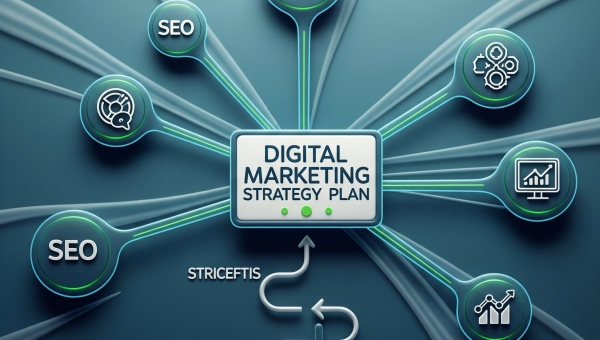
How to Plan a Digital Marketing Strategy Step by Step

How to Plan a Digital Marketing Strategy Step by Step

In today's dynamic digital world, having a well-defined digital marketing strategy isn't just an advantage—it's a necessity! If you want your business to grow, reach the right audience, and convert visitors into customers, you can't leave it to chance. But where do you start? Don't worry, we've created this step-by-step guide to help you plan an effective digital marketing strategy.

Step 1: Define your clear and measurable objectives

Before taking any action, you need to know what you want to achieve. Your goals should be SMART : Specific, Measurable, Attainable, Relevant, and Time-bound.

To do?

  • Ask yourself: Do you want to increase web traffic? Generate more leads? Improve online sales? Increase brand awareness?
  • Set clear metrics: For example, "increase organic traffic by 20% over the next 6 months" or "generate 50 qualified leads per month."

Define tus objetivos de marketing claros y medibles

Step 2: Research Your Target Audience

Knowing who you're talking to is essential. A successful digital marketing strategy is built on a deep understanding of your ideal customers.

To do?

  • Create buyer personas : Semi-fictional profiles of your ideal customers, including demographics, interests, pain points, challenges, and online behaviors.
  • Use analytics tools (Google Analytics, social media tools) to understand how your current audience interacts.

Investiga a tu Público Objetivo

Step 3: Analyze your Competition

Identifying your direct and indirect competitors will give you an idea of what's working in your industry and what opportunities you can take advantage of.

To do?

  • Investigate their content, social media, SEO, and paid advertising strategies.
  • Identify your strengths and weaknesses. What can you do better or differently?

Analiza tu competencia

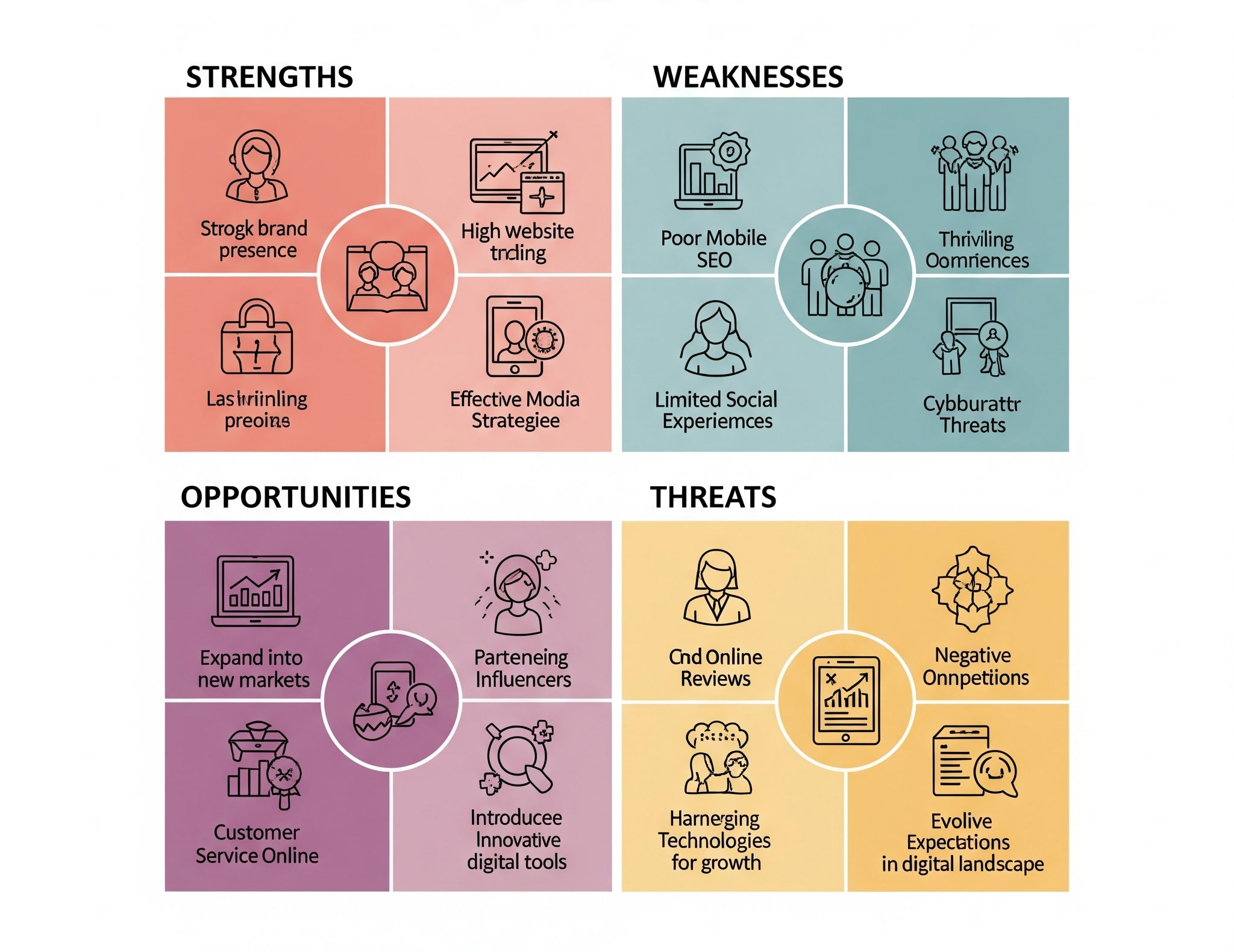
Step 4: Perform a Digital SWOT Analysis

Evaluate the strengths, weaknesses, opportunities, and threats of your own digital presence.

To do?

  • Strengths: What do you do well in the digital realm? (e.g., high-quality content, good ranking for certain keywords).
  • Weaknesses: Where do you need to improve? (e.g., poor social media presence, slow website).
  • Opportunities: What trends or niches could you explore? (e.g., new markets, emerging technologies)
  • Threats: What external factors could affect you? (e.g., changes to Google's algorithm, new competition).

Cuales son tus fortalezas y tus debilidades

Step 5: Choose Your Digital Marketing Channels and Tactics

Based on your goals and prior analysis, select the channels and tactics that will allow you to reach your audience most effectively.

To do?

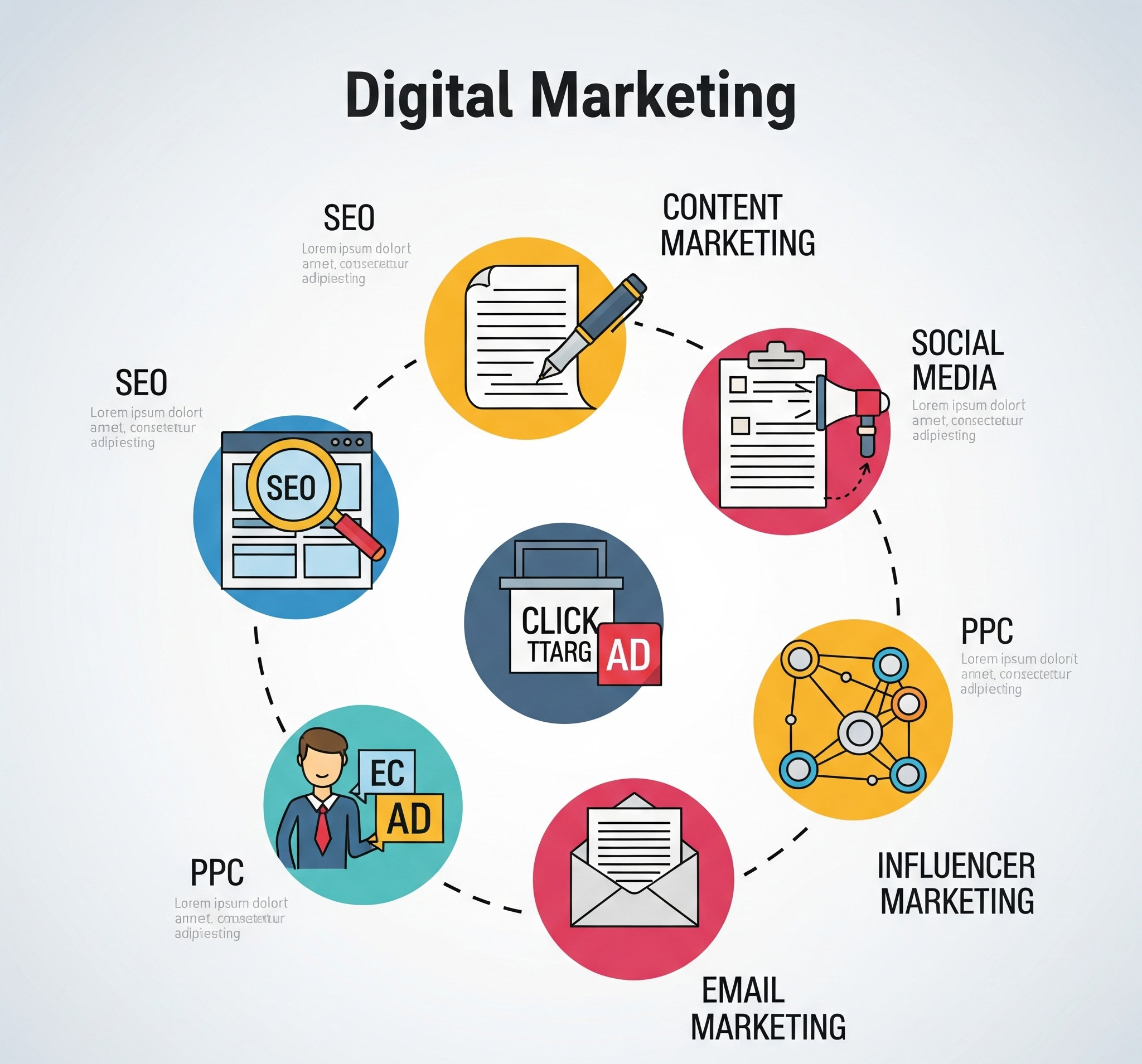
  • SEO (Search Engine Optimization): Improve your organic visibility.
  • Content Marketing: Create blogs, videos, and infographics that educate and entertain your audience.
  • Social Media: Choose the platforms where your audience spends the most time.
  • Paid Advertising (PPC): Google Ads, social media ads.
  • Email Marketing: Build relationships and foster loyalty.
  • Influencer Marketing: Collaborate with relevant figures in your niche.

Elige los canales que pueden funcionar en tu negocio

Step 6: Create Your Content and Editorial Calendar

Content is king. Plan what type of content you'll create, when you'll publish it, and on what channels.

To do?

  • Develop an editorial calendar that includes topics, formats, publication dates, and distribution channels.
  • Make sure your content is valuable, relevant, and SEO-optimized (keywords, structure).

Crea tu Contenido y Calendario Editorial

Step 7: Implement and Launch Your Strategy

Once you have everything planned, it's time to put it into action.

To do?

  • Set up your ad campaigns.
  • Publish your content according to the schedule.
  • Schedule your social media posts.
  • Make sure your website is optimized and working properly.

Implementa y Lanza tu Estrategia

Step 8: Measure, Analyze and Optimize

Digital marketing isn't static. It's a continuous process of testing, measuring, and adjusting.

To do?

  • Use analytics tools (Google Analytics, social media tools, etc.) to track the performance of your campaigns.
  • Analyze the data: Are you achieving your goals? Which tactics are working and which aren't?
  • Make constant adjustments and optimizations to improve your results.

Mide los resultados y rectifica si es necesario

Planning a digital marketing strategy is an exciting journey that, with these steps, will allow you to build a strong online presence and achieve your business goals. Get started today and take your brand to the next level!

Need help designing or implementing your digital marketing strategy? Contact us and let's talk about how we can boost your business!

What is cross-platform SEO and why do you need it now for your online store's ranking?

What is cross-platform SEO and why do you need it now for your online store's ranking?

Online store positioning no longer depends solely on Google. In 2025, your potential customers will be searching for recipes on TikTok, comparisons on YouTube, prices on Amazon, and answers on ChatGPT. If your brand doesn't appear on these channels, you're losing sales opportunities every second.

This is the world of cross-platform SEO: the strategy you need now to make your online store visible at all key points of the consumer journey.

What is cross-platform SEO?

Cross-platform SEO is the discipline that focuses on optimizing your presence across all relevant search engines: traditional search engines like Google, social platforms like YouTube and TikTok, marketplaces like Amazon and Etsy, voice assistants like Siri and Alexa, and even artificial intelligence engines like ChatGPT, Gemini, and Perplexity.

In other words, it's the evolution of online store positioning . It's no longer enough to appear first on Google: your store must be discoverable, citable, and usable by very different algorithms.

Why is it important in 2025?

There are several factors that are redefining how users search; if we limit our SEO strategy to Google, we'll be losing half the market.

  • Generative Results on Google (GSG): AI responds directly, without clicks.

  • AI search engines (ChatGPT, Gemini, Perplexity): Millions of users already use them as their primary search engines.

  • Vertical searches on networks (TikTok, Instagram, YouTube): information is consumed before reaching the web.

A new approach: 360° research

To position your online store in all environments, you need to understand how users search on each platform:

Platform

Key tools

Dominant intention

Google

Search Console, Semrush, SGE prompts

Informational / transactional

YouTube

vidIQ, autosuggest, transcripts

Comparisons / How-to

TikTok & Reels

Hashtags, trending sounds

Quick Tips / Discovery

Amazon & Etsy

Helium 10, Jungle Scout

Immediate purchase

Voice assistants

Structured data + conversational tone

Direct answer

AI Engines

Prompts, semantic content

Reliable summary


How to adapt content to each digital channel?

Publishing online isn't just a matter of copying and pasting the same content everywhere. Each platform—be it Google, YouTube, or TikTok—has its own rules of the game. If you want your brand, product, or message to truly reach your audience, you must adapt what you say (and how you say it) to each channel. Here's how to do it easily:

  • Google + SGE (Search Generative Experience):
    Your website should have comprehensive, well-written articles (minimum 1,200 words), with short, easy-to-read paragraphs. Add frequently asked questions (FAQs) and organize information in formats Google understands, such as step-by-step guides (HowTos) or product sheets.

  • YouTube:
    Publish videos between 6 and 12 minutes long, divided into chapters and with titles designed for easy discovery. Adding automatic subtitles not only improves accessibility, but also helps search engines and artificial intelligence systems better understand your content.

  • TikTok, Shorts and Reels:
    Everything moves very fast here. You have to hook your audience in the first two seconds. Use subtitles, keywords visible on screen, and videos that surprise or visually impact.

  • Marketplaces (Amazon, Etsy, etc.):
    Your products must stand out. Use titles with specific (long-tail) keywords, upload at least seven high-quality images, add videos showing the product in action, and encourage your customers to leave reviews (always legal).

  • Voice assistants (Alexa, Siri, etc.):
    Create FAQ pages with very short answers (about 25-30 words), use natural language, and tag that content with “Speakable” structured data so attendees can recognize it.

  • Artificial intelligence engines (such as ChatGPT or Perplexity):
    Structure your content with lists, tables, and links to trusted sources. Also, make sure your website allows access to AI by adding "allow AI" to your robots.txt file.


Technical SEO and multi-channel authority

For your online store positioning to be effective in this fragmented ecosystem, you need technical consistency:

  • Responsive templates with excellent mobile performance (Core Web Vitals).

  • Precise structured data: Product, Event, FAQ, Podcast…

  • Unified brand presence: same naming, favicon, and profiles across all platforms.

  • Distributed authority: media mentions, marketplace reviews, Pinterest saves, AI mentions, etc.

How can Click Online 360 help you?

At Click Online 360, we are experts in online store positioning strategies that go beyond Google. We apply true multi-platform SEO for e-commerce businesses that want to be leaders in their sector.

We help you to:

  • Design your 360° search map tailored to your buyer persona.

  • Create native content for each channel and search type.

  • Implement advanced tracking systems to measure real results.

  • Scale your visibility and authority with digital PR and social SEO campaigns.

Ready to master the new SEO?

Cross-platform SEO is no longer optional: it's the only way to ensure your online store is present where users actually search . From Google to TikTok, from Amazon to ChatGPT, your brand should be everywhere.

👉 Write to us and we'll start your multi-platform positioning strategy today.
Click Online 360, the agency that boosts your online store throughout the entire digital ecosystem.

The AEO Revolution: Optimizing for Response Engines in the Age of AI

In the fast-paced world of digital marketing, search engine optimization (SEO) has long been the cornerstone of online visibility. However, with the advancement of artificial intelligence and the evolution of search platforms, a new discipline is gaining ground: Search Engine Optimization (SEO). At Clickonline360, we understand that adapting to these changes is crucial to maintaining relevance and leadership.

What is Response Engine Optimization (AEO)?

Answer Engine Optimization (AEO) is a strategy that goes beyond traditional SEO by focusing on creating content that provides direct and concise answers to user questions. Its goal is for your information to be selected and presented as a "direct answer" by AI-powered search engines, such as featured snippets, knowledge panels, voice responses, and generative AI platforms like ChatGPT, Perplexity AI, and Microsoft Copilot.

While SEO seeks to improve a website's overall ranking for keywords, AEO focuses on optimizing content to appear in these quick-response formats, positioning your brand as a credible authority that offers immediate and relevant solutions.

Why is AEO Crucial Today?

The way users search for information is changing. Increasingly, people expect instant and accurate answers to their questions, often through voice assistants or chatbots. This behavioral shift highlights the importance of AEO:

  • Greater Visibility : Direct answers and featured snippets occupy the most prominent positions in search engine results pages (SERPs), often above traditional organic results.
  • Improved CTR : By appearing so prominently, your content has a greater chance of attracting clicks, even if it's not in the traditional first organic position.
  • Strengthened Brand Authority : Being the source of direct response positions your brand as an authority and a benchmark in your industry, which builds trust and credibility.
  • Competitive Advantage : As more companies realize the potential of AEO, those that proactively implement it will gain a significant advantage.
  • Better User Experience : By providing quick and relevant answers, you improve the overall user experience, which can translate into increased customer satisfaction and brand loyalty.

AEO vs. Traditional SEO: A Complementary Approach

It's important to understand that AEO doesn't replace SEO, but rather complements it. While traditional SEO focuses on broad keyword visibility and ranking in search results, AEO refines this approach to ensure content is easily identifiable and extractable by search engines.

Feature Traditional SEO AEO
Main Objective Increase visibility and organic traffic Provide direct answers to specific queries
Content Focus Broad, keywords, related topics Precise, concise, focused on questions and answers
Results Positions in SERPs Featured snippets, knowledge panels, voice
Metrics Rankings, traffic, CTR Appearances in answers, attributions, quotes

A complete digital marketing strategy today must integrate both approaches to maximize visibility and user engagement.

Key Strategies for Implementing the AEO

To optimize your content for search engines, consider the following strategies:

  1. Conversational Question Research : Instead of just searching for keywords, identify the exact questions your target audience is asking. Keyword research tools, forums, competitor FAQs, and Google's "People Also Ask" are great resources.
  2. High Quality and Structured Content :
    • Direct Answers : Start your content sections with a direct and concise answer to a specific question.
    • Clarity and Precision: Language should be clear, easy to understand, and free of unnecessary jargon.
    • Using Headings (H1, H2, H3): Structure your content with logical headings that guide the reader and search engines.
    • Lists and Tables : Use numbered lists, bullets, and tables to present information in an organized, scannable way.
    • Comprehensive Content : Although answers should be concise, the content should be comprehensive and address all facets of the question.
  3. Optimizing for Voice Search : Voice queries are naturally more conversational. Adapt your content to the natural language people use when speaking, including complete question phrases.
  4. Structured Data Markup (Schema Markup) : Implement Schema.org markup in your code to help search engines understand the context of your content. This is especially useful for FAQ Page schemas, recipes, products, etc.
  5. Frequently Asked Questions (FAQ) Pages : Create well-structured sections or pages dedicated to frequently asked questions, with clear questions and concise answers.
  6. Building Authority and Trust : Search engines prioritize trusted sources. Build your domain authority by:
    • Authoritative Content : Publishes original research, case studies, and in-depth analyses.
    • Quality Links (Link Building) : Get links from relevant, high-authority websites.
    • Review Management : Maintain a positive online reputation and respond to customer reviews.
  7. Off-Site Optimization : Promote your authoritative content, collaborate with other publishers, and optimize your social media profiles and local listings to maintain a consistent and trusted online presence.

Measuring the Success of the AEO

To evaluate the performance of your AEO strategy, you need to go beyond traditional SEO metrics:

Featured Snippet Appearances : Monitor when your content appears in "position zero."
AI Mentions and Citations : Track whether AI platforms cite or mention your business as a source of information in their responses.
Answer Engine Referred Traffic : Analyzes traffic that comes directly from these search features.
User Engagement : Measures how users interact with your content after being directed from a direct response.

Conclusion

AEO isn't just a trend; it's a natural evolution of how users interact with information online. At Clickonline360, we encourage you to adopt this strategy to ensure your business is not only visible but also the direct source of answers in an AI-driven world. By investing in AEO, you'll be building a solid foundation for the future of your digital presence, improving the user experience, and consolidating your brand's authority in an ever-changing search landscape.


How to fix duplicate or low-quality content with AI

How to fix duplicate or low-quality content with AI

Duplicate or low-quality content can negatively impact any website's SEO ranking. Therefore, learning how to correct duplicate or low-quality content with AI has become a priority for businesses, copywriters, and digital marketers.

Below, ClickOnline360 explains step-by-step how to use artificial intelligence to identify and optimize content that isn't performing as it should.

The importance of correcting duplicate or low-quality content

Duplicate content—whether internal or external—can confuse search engines, dilute your website's authority, and cause a drop in rankings. Similarly, low-quality content (shallow, uninformative, or poorly structured) can reduce user retention and increase bounce rates.

The good news is that these problems can now be detected and corrected with the help of artificial intelligence tools. Below, we explain how to do this effectively.

Intelligent rewriting with AI

One of the most effective methods for addressing duplicate or low-quality content is rewriting the text using language models like ChatGPT. This tool allows you to maintain the original message of the content, while modifying its structure, style, and vocabulary to make it unique.

In addition to avoiding duplication, AI can help you enrich your content by providing added value, such as real-life examples, relevant statistics, or practical tips. It's also possible to generate synonyms, metaphors, or more creative rewordings that resonate better with the reader. Still, remember that this tool requires expert review to avoid any errors.

Improve SEO quality with the help of AI

Artificial intelligence can also help you improve your content from an SEO perspective, ensuring that it aligns with search intent and meets Google's quality standards.

Among the most useful tasks you can automate are:

  • Align the text with the user's search intent (whether informational, transactional, or navigational).

  • Add a clear hierarchy of H2 and H3 subheadings.

  • Suggest secondary keywords and long-tail variations.

  • Generate related frequently asked questions (FAQs) to enrich the semantics of the page.

Consolidate or eliminate pages with similar content

In some cases, the solution isn't rewriting, but consolidating. When a website has multiple URLs with similar content, cannibalization can occur—pages competing with each other for the same keyword.

With the help of AI, you can merge content into a single, more comprehensive, coherent, and higher-quality page. Once this is done, it's recommended to apply 301 redirects to older or lower-performing pages to preserve their SEO authority.

This strategy not only improves the user experience, but also simplifies the site architecture and improves search engine crawling.

Additional tips to avoid duplicate or low-quality content

  • Always prioritize search intent: Make sure your content clearly addresses what the user needs or expects to find.

  • Don't automate without supervision: AI is a powerful tool, but there should always be human review to ensure final quality.

  • Use Google Search Console to spot opportunities: Identify underperforming pages with low organic traffic as candidates for optimization.

Do you need professional help?

At ClickOnline360, we are experts in SEO positioning and always up to date with the latest innovations in artificial intelligence applied to digital marketing. We specialize in identifying opportunities, optimizing content, and implementing strategies that combine creativity, data analysis, and cutting-edge technology.

Knowing how to fix duplicate or low-quality content with AI is a key skill for improving your website's ranking, reducing technical SEO errors, and delivering a more valuable user experience.

At ClickOnline360, we help you implement intelligent solutions that combine the power of artificial intelligence with a tailored SEO strategy . If your site needs a thorough content overhaul, we're here to help.


What is Google Ads AI Max and how can it transform your search campaigns?

What is Google Ads AI Max and how can it transform your search campaigns?

In an increasingly competitive digital environment, standing out in search results is key for any business. Google knows this, and that's why it's launching a new feature that promises to revolutionize the way brands manage their online advertising: AI Max for search campaigns .

Discover our Google Ads services at ClickOnline360

What is AI Max and why is it important?

AI Max is an intelligent, AI-powered solution designed to maximize the performance of Google Ads search campaigns. Its goal is clear: to improve the efficiency, reach, and personalization of your ads with minimal manual intervention.

This new approach combines the best of automation with machine learning technologies, allowing advertisers to capture more conversions at optimized costs.

Official Source – Google Blog: Get the most out of AI Max

Key benefits of using AI Max in your campaigns

1. Automatic scope extension

AI Max uses intelligent broad match and predictive models to identify new, relevant searches beyond your current keywords. This means more opportunities to capture qualified traffic you may not have considered before.

2. Dynamic and personalized ads

Thanks to generative AI, ads automatically adapt in real time based on user search intent, resulting in more relevant messages, greater engagement, and improved click-through rates.

3. Brand controls and transparency

While automation is key, Google doesn't forget the importance of control. With AI Max, you can define geographic boundaries, specific terms, exclusions, and brand reviews to maintain consistency with your strategy.

4. Detailed analysis and reports

The new feature incorporates more specific metrics to understand which AI elements are driving performance. This way, you can make more informed decisions and continually improve your strategy.

Proven Results: Does AI Max Really Work?

The first results shared by Google show promising figures:

  • Up to 14% more conversions with a stable CPA or ROAS.

  • In more restricted campaigns (for example, with exact keywords), the increase reaches up to 27% .

  • Brands like L'Oréal and MyConnect are already reporting significant improvements in their conversion costs and lead generation.

Who is this tool ideal for?

AI Max is especially useful for:

  • Companies that already use automated search campaigns.

  • Brands that want to scale results without increasing resources.

  • Marketing teams looking to incorporate AI into their advertising strategy in a simple and effective way.

How to get started with AI Max

If you're already using search campaigns with clear objectives (such as conversions or sales), you can activate AI Max with a single click within your Google Ads account. The tool will begin collecting data, learning from user behavior, and optimizing your ad performance.

And if you don't know where to start, don't worry!

At ClickOnline360, we help you implement AI Max step by step.

Conclusion

AI Max marks a new step in the evolution of digital advertising. It's not just about automation, but about harnessing the power of artificial intelligence to better connect with users, optimize resources, and improve ROI.

At ClickOnline360 , as a Google Ads-certified agency, we're ready to help you implement this new technology in your campaigns and take your results to the next level.


Evergreen SEO: Fundamental Strategies That Never Go Out of Style

Evergreen SEO: Fundamental Strategies That Never Go Out of Style

In the fast-paced world of digital marketing, where trends come and go at lightning speed, there is a beacon of stability: evergreen SEO. Unlike ephemeral tactics that bloom and wither with each algorithm update, evergreen SEO focuses on fundamental strategies that remain relevant and effective over time.

Imagine planting an oak tree instead of a seasonal flower. That's the essence of evergreen SEO: building a solid foundation that consistently attracts organic traffic, adapting to algorithmic changes, and maintaining its long-term value.

Why choose Evergreen SEO?

Investing in evergreen SEO is a smart move for several reasons:

  • Long-term profitability : Once implemented, evergreen strategies continue to generate results without the need for constant re-optimization.
  • Sustainable Growth : Build an online business that thrives over time, rather than relying on temporary traffic spikes.
  • Brand Authority : Positions you as a trusted expert in your niche, making you the go-to source for your audience.
  • Competitive advantage : Allows you to outperform competitors who focus solely on short-term trends.
  • Scalability : Your SEO strategy can grow without you having to constantly reinvent the wheel.

Pillars of Evergreen SEO: Strategies That Last

Evergreen SEO relies on a number of key components that ensure its longevity and effectiveness:

Creating Timeless Content: The Foundation of a Lasting Resource Center

The heart of evergreen SEO lies in creating content that addresses your audience's fundamental needs and questions—content that will be valuable today, tomorrow, and years from now.

Industry Core Topics: Focus on detailed guides, tutorials, and resource pages on key topics in your industry.
Regular updates: Evergreen doesn't mean "set it and forget it." Keep your content fresh by updating it periodically with new information, insights, and examples.
Content Types: Prioritize how-to guides, step-by-step tutorials, and resource pages. These formats attract consistent traffic because they solve ongoing problems.

Evergreen Keyword Research: Targeting Long-Term Search Intent

Evergreen SEO is all about finding and targeting keywords that have staying power.

Long-tail keywords: These are your best allies. Not only do they match specific user intent, but they also have a consistent search volume over time.
User intent: Focus on what your audience is actually searching for, not just what's trending. Tools like Semrush, Ahrefs, and Google Keyword Planner are essential for uncovering these gems.
Consistency: Look for keywords that have shown consistent search volume over time. These are indicators of long-term relevance.

On-Page Optimization: Creating Content That Stands the Test of Time

On-page optimization is where you fine-tune your content to ensure it remains relevant and easily discoverable.

Title tags and meta descriptions: Create these elements with longevity in mind. Use clear, descriptive language that won't become outdated.
Schema markup: Implement schema markup to give search engines a better understanding of your content. This improves visibility and click-through rates.
Alt Text and File Names: Optimize your images with alt text and descriptive file names. This not only improves accessibility but also keeps your content relevant in image search results.

Technical SEO: Keeping Your Site in Top Condition

Technical SEO is about making sure your website is fast, secure, and accessible, today and tomorrow.

Site Speed and Core Web Vitals: Prioritize speed. Google loves fast sites, and so do your visitors. Pay close attention to Core Web Vitals metrics like loading speed, interactivity, and visual stability.
Responsive design: Make sure your site is mobile-friendly. This isn't just a trend; it's a necessity as mobile search continues to grow.

Link Building: The Evergreen Approach to Earning Links

Building content that demonstrates your expertise and authority can enhance your evergreen strategy.

Credible Sources: Link to credible and authoritative sources within your content.
Showcase your expertise: Highlight your credentials and experience within your content to establish trust.

Adapting to the Future of SEO

While the fundamental strategies of evergreen SEO remain, it's crucial to stay on top of emerging trends to ensure their continued effectiveness. Artificial intelligence (AI) and machine learning are transforming SEO, enabling smarter and more personalized optimizations. Optimizing for voice search is becoming increasingly important as virtual assistants gain popularity. Video content remains a dominant force, and optimizing your videos for SEO is essential. Finally, building content that demonstrates Expertise, Authority, and Trustworthiness (EAT) remains vital to earning Google's trust.

Conclusion: Invest in the Present for a Solid Future

Evergreen SEO isn't a quick fix, but rather a long-term strategic investment. By focusing on creating timeless content, evergreen keyword research, sustainable on-page optimization, and robust technical SEO, you'll build an online presence that will withstand fads and continue to drive valuable traffic to your website for years to come. Remember, the oak will always outperform the bloom.



How do Core Web Vitals influence your online store's ranking?

How do Core Web Vitals influence your online store's ranking?

In the world of e-commerce, every second counts. Online store ranking increasingly depends on offering a fast, stable, and intuitive experience. This is where Core Web Vitals come into play, a set of key metrics that Google uses as a ranking factor and that directly influence the visibility of your e-commerce site.

Below, from Click Online 360, an SEO agency with extensive experience in eCommerce projects, we explain why these metrics can make the difference between an online store that sells... and one that doesn't take off.

What are Core Web Vitals and why do they matter for SEO?

Core Web Vitals are three metrics that measure a website's performance in key aspects of user experience:

  • LCP (Largest Contentful Paint) : Measures how long it takes for the largest visible content (such as a main image or banner) to load. An optimal value is less than 2.5 seconds.

  • INP (Interaction to Next Paint) : This replaces the FID metric since March 2024. It evaluates the responsiveness of the entire session, not just the first click. It must be under 200 milliseconds.

  • CLS (Cumulative Layout Shift) : Measures unexpected changes in the layout while the page loads. A good value is less than 0.1.

For any online store, these metrics are crucial. A poor score can lead to user frustration, abandoned shopping carts, and lost sales. It also negatively impacts your online store's ranking in Google search results.

How to measure your online store's Core Web Vitals

There are tools to understand the status of your website, which allow you to analyze your URL and view both laboratory and real-world metrics using data from Chrome users.

Additionally, web audits show you detailed LCP, INP, and CLS values and offer personalized technical recommendations.

At Click Online 360, we use various tools to accurately analyze each eCommerce store and prioritize the actions that truly improve performance and conversion.

Steps to improve Core Web Vitals and boost your online store

1. Audit your site

A technical website audit will allow you to get a clear breakdown of critical points, without the need for advanced development knowledge. This will allow you to make data-driven decisions.

2. Optimize heavy images and resources (improve LCP)

Most loading times come from poorly optimized images. Use formats like WebP, enable lazy loading, and compress your files. If you work with WooCommerce or Shopify, there are plugins that automate this process.

3. Reduce main thread blocking (improves INP)

Minimize unnecessary JavaScript scripts, load files asynchronously, and prioritize essential resources. Lower latency translates into a better user experience... and improved online store rankings.

4. Avoid unexpected movements (CLS improvement)

The trick is to reserve the space that elements like images, sliders, or ads will take up. Use fixed values in your CSS and you'll prevent the design from "jumping" while loading.

5. Activate caching and use a CDN

Especially if you have customers in different locations, a CDN reduces load times worldwide. Additionally, browser caching speeds up the experience for returning users.

Click Online 360: Technical SEO experts for online stores

At Click Online 360, we specialize in improving online store rankings from a technical, strategic, and data-driven perspective. Our approach combines SEO auditing, Core Web Vitals analysis, performance improvement, and continuous optimization to achieve what every online store desires: more traffic, more conversions, and more sales.

We work with e-commerce businesses of all sizes, adapting strategies to the real needs of each digital business.

Speed, stability and experience = better positioning

Core Web Vitals are much more than numbers: they reflect how a user experiences your online store. Improving them means offering a smooth, reliable, and fast shopping experience, which not only improves conversions but also improves your online store's search engine ranking.

Remember: every millisecond counts. And in eCommerce, the difference between success and abandonment is often decided by the first click.


Have you been affected by Google's latest algorithm update? Here's how you can find out

Have you been affected by Google's latest algorithm update? Here's how you can find out

Google updates are one of the most decisive factors for web positioning. If you've noticed a drop in traffic to your site in recent weeks, you've likely been affected by the latest algorithm update.

Below, we explain how to identify the impact, what you can do to adapt, and how Click Online 360 , an SEO agency with extensive experience in the sector, can help you recover and emerge stronger.

What are Google updates?

Google constantly makes improvements to its algorithm to provide more relevant and useful results to users. Some updates are minor, but others, known as Core Updates , can completely change the way websites are evaluated. These updates affect factors such as content quality, user experience, and domain authority.

Signs that your website has been affected by an update

  • Sudden drop in organic traffic.

  • Lower visibility in main keyword rankings.

  • Decrease in the number of leads or conversions.

  • Changes in user behavior on your site (more bounce, less time spent).

If you notice any of these symptoms, your site likely needs an audit to identify which areas are no longer compliant with Google's new requirements.

How to recover after an update: the essential checklist

1. Evaluate the quality of the content

One of the main goals of Google updates is to reward original, useful, and relevant content.

  • Originality and value : Avoid duplication. Each piece of content should precisely address a specific search intent.

  • Depth and relevance : Don't write just to rank, but to address real questions. Comprehensive content always has an advantage.

  • Constant updating : Keep your texts up-to-date. An outdated article loses authority.

2. Strengthens the user experience (UX)

Google prioritizes sites that offer comfortable and pleasant navigation.

  • Responsive design : Your website should look perfect on all devices.

  • Loading Speed : Optimize images, scripts, and hosting so your site loads in less than 3 seconds.

  • Intuitive navigation : Clear menus, well-structured links, and logical visual hierarchy.

3. Improve the technical aspects of SEO

The technical part remains essential after each Google update .

  • Clean URLs : That explain the content without strange characters.

  • Well-implemented tags : Correctly use H1, H2, meta descriptions and ALT tags in images.

  • Sitemap and robots.txt : Make sure bots can crawl and index your site without hindrance.

4. Prioritize EEAT (Experience, Expertise, Authority and Trust)

Starting in 2023, Google will place more emphasis on EEAT, rewarding sites with credibility.

  • Clear authorship : Indicate who signs the content and why they are an expert on the subject.

  • Reliable sources : Provides data backed by recognized entities.

  • Reviews and Testimonials : Showcase real customer reviews to reinforce your authority.

5. Monitor and analyze performance

You can't improve what you don't measure.

  • Google Search Console : Identify indexing errors, traffic drops, and new opportunities.

  • Google Analytics : Study user behavior and adjust your strategy.

  • SEO Audits : Conduct periodic reviews with experts to detect weaknesses and correct them.

6. Follow Google's official guidelines

  • Avoid bad practices : No keyword stuffing, cloaking, or purchased links.

  • Focus on the user : Content should be designed to address real needs, not to manipulate rankings.

  • Always stay informed : Follow official and specialized sources such as the Search Central blog or the Google Updates channel.

Why trust Click Online 360 for your SEO recovery?

At Click Online 360, we've been helping companies achieve stable and lasting rankings for years, even after the most demanding Google updates . Our team of SEO experts conducts comprehensive audits, redesigns strategies, and supports you step by step to help your website rise again in the rankings.

We believe in sustainable SEO, based on data, strategy, and experience. And above all, we believe that every project is unique and deserves a customized solution.


Google updates can cause uncertainty, but they're also an opportunity to improve. If you've noticed a drop in your metrics, don't panic. Review your site, adjust your content, improve the user experience, and seek the support of an experienced SEO agency like Click Online 360. Only then will you be able to recover and regain your strong positioning.


How to Optimize Your Meta Ads Campaigns with AI and Automation

How to Optimize Your Meta Ads Campaigns with AI and Automation

Nowadays, optimizing advertising campaigns has become a decisive factor for brand success. One of the most powerful and dynamic platforms for reaching your target audience is Meta Ads (formerly Facebook Ads). But how can you take your results to the next level? The answer lies in artificial intelligence (AI) and automation.

Recommendations from our expert Meta Ads agency

In this article, based on our experience as a Meta Ads expert agency , we'll share key strategies for optimizing your campaigns using the latest AI and automation tools. Get ready to maximize your return on investment (ROI) and improve your ad performance!

  1. Understanding the Role of AI in Meta Ads

Artificial intelligence has revolutionized the way advertising campaigns are managed. Meta uses advanced machine learning algorithms to analyze vast amounts of data, identify patterns, and optimize ad delivery in real time.

Benefits of AI in Meta Ads:

  • Precise segmentation: AI identifies audiences most likely to convert.
  • Automatic optimization: Adjusts bids and budget allocation based on performance.
  • Personalization at scale: Create more relevant and tailored advertising experiences for each user.
  1. Implement Automated Campaigns

Meta Ads offers several automated tools that simplify campaign management and optimization. Taking advantage of these features can save you time and improve the effectiveness of your ads.

Key Strategies:

  • Advantage+ Campaigns : Use this option to optimize ad delivery and automatically find the most valuable audiences.
  • Campaign-Level Budget Optimization (CBO) : Let AI allocate your budget across different ad sets based on their performance.
  • Automated bidding: Use the "Maximum Cost per Result" strategy to maximize conversions at the most efficient cost.
  1. Using Dynamic Creativity

Content is the heart of any advertising campaign. Meta Ads' dynamic creative allows you to display different combinations of images, videos, headlines, and descriptions based on user behavior and preferences.

Good Practices for Dynamic Creativity:

  • Diversify your assets: Create multiple versions of your ads with different messages and visual formats.
  • Test and learn: Analyze which combinations perform best and adjust your strategy.
  • Automate A/B testing: Use AI to efficiently compare ad variants.
  1. Leverage Advanced Segmentation

Precise targeting is essential to reaching the right people at the right time. Meta Ads offers advanced options that allow you to reach your ideal audience automatically.

AI Segmentation Strategies:

  • Lookalike Audiences: Create audiences that resemble your most valuable customers.
  • Custom Audiences: Segment users based on their interaction with your website, app, or content.
  • Conversion Event Segmentation: Leverage conversion data to dynamically adjust your targeting.
  1. Monitor and Optimize in Real Time

Automation doesn't mean "set it and forget it." It's crucial to monitor your campaigns in real time and make continuous adjustments.

Monitoring and Analysis Tools:

  • Meta Business Suite: Centralize the management and analysis of your campaigns.
  • Automated Alerts: Set up notifications to detect fluctuations in performance.
  • Custom Reports: Use custom dashboards to analyze key KPIs like CPA, ROAS, and CTR.
  1. Optimize the Conversion Funnel

AI not only improves ad delivery, it also optimizes every stage of the conversion funnel. From impression to sale, automating user tracking is essential to maximizing results.

Recommendations for the Funnel:

  • Automated Retargeting: Re-engage users who didn't complete a conversion.
  • Attribution Models: Use data-driven attribution to understand which channels drive sales.
  • Customer Journey Personalization: Use AI to tailor messages based on user behavior.
  1. Staying Up to Date with Meta Ads News

The Meta ecosystem is constantly evolving. Staying up-to-date with the latest automation and AI features is vital to maintaining a competitive advantage.

Update Sources:

  • Meta for Business Blog : Regular review of official updates.
  • Meta Advertiser Community: Participate in forums and webinars.

Why you should hire an agency that specializes in Meta Ads

Optimizing your Meta Ads campaigns with AI and automation isn't an option; it's a necessity in today's digital environment. From precise targeting to budget optimization and dynamic creative, Meta tools enable brands to achieve their goals more effectively.

At our digital marketing agency , we have the experience and tools to help you implement these strategies effectively. If you want to take your Meta Ads campaigns to the next level, contact us today and find out how we can help you maximize your results!

The future of digital marketing is automated and powered by AI! Harness its potential to stand out in the market!